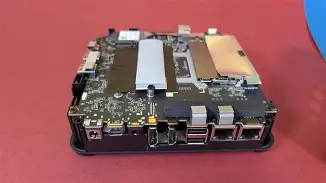
5 Hidden Features of the Chuwi Aubox 8745 Mini Pc You Must Know About
The Chuwi Aubox 8745 Mini Pc arrives as a compact, budget-friendly option for people who need desktop-level functionality in a tiny footprint. On paper it looks like many mini PCs: small chassis, modest power draw, and a selection of modern ports. What often separates a pleasant ownership experience from a frustrating one are the subtle, under-advertised features that reveal themselves after unboxing and a little tinkering. This article highlights five of those “hidden” features, explains why they matter in real-world use, and helps buyers make an informed decision.
Introduction: Why hidden features matter for mini PCs
Mini PCs are bought for a wide variety of reasons: home theater systems, office desks with limited space, classroom deployments, lab servers, and lightweight developer workstations. Buyers typically care about size, performance-per-dollar, noise, upgradeability, and connectivity. Because manufacturers often prioritize size and cost, some important capabilities are not obvious until users open up the chassis, dive into the UEFI/BIOS, or test long-term workloads. For the Chuwi Aubox 8745 Mini Pc, these hidden capabilities unlock flexibility well beyond its headline specs.
Overview: What the Aubox 8745 brings to the table
Before getting into the five hidden features, it helps to frame the Aubox 8745 as a class of device: a compact Windows-based mini PC with a focus on everyday productivity, multimedia playback, and lightweight server tasks. It competes with other small-form-factor devices by offering a mix of ports, modest cooling, and an emphasis on value. The hidden features discussed below are the ones that increase longevity, versatility, and user satisfaction without demanding significant additional expense.
Hidden Feature 1 — Upgrade paths that are easier than they look
One of the most common surprises with many mini PCs is just how upgrade-friendly they are once the bottom cover is removed. The Aubox 8745 often exposes upgrade options that matter to buyers who want longevity without buying a higher-tier model.
- Accessible storage expansion: Many owners discover an internal M.2 slot (for NVMe or SATA M.2 SSDs) that allows a dramatic boost in speed compared with the preinstalled eMMC or SATA drive. Adding an NVMe SSD transforms boot time and application responsiveness.
- Secondary 2.5" bay or adapter options: If the chassis includes space for a 2.5" drive (or supports a simple adapter), adding mass storage for media libraries, backups, or local VM images becomes straightforward and inexpensive.
- RAM upgradeability: Some units expose SO-DIMM slots that let users increase RAM to support heavier multitasking or small virtualized environments. Swapping or adding RAM is often the single-best upgrade for smooth responsiveness in multitasking use.
Real-world use case: a small law office can replace the bundled storage with a 512GB NVMe and double RAM to keep multiple browser windows, document editor, and PDF search tools running without swapping to disk—delivering a noticeable productivity improvement without replacing the whole unit.
Hidden Feature 2 — Multi-display and docking flexibility often underused
Connectivity on mini PCs looks straightforward in spec lists, but some models hide useful display capabilities that matter for multi-monitor users and media applications.
- Dual-display support: The Aubox 8745 can drive two (and sometimes three) external monitors depending on the combination of HDMI, DisplayPort, and USB-C outputs. Buyers who plan to use the unit for productivity or kiosk tasks should test combinations—some ports share bandwidth, and certain resolutions or refresh rates require specific ports.
- USB-C and DisplayPort Alt Mode: If the USB-C port supports DisplayPort alt mode, a single cable to a monitor or a USB-C docking station can deliver video, USB peripherals, and power (if supported), simplifying desk setup for shared workspaces.
- MST and 4K considerations: For 4K displays or daisy-chaining, understanding the graphics throughput and whether MST (Multi-Stream Transport) is supported prevents disappointment. The hidden value is that the Aubox 8745 often handles 4K playback and dual-1080p productivity without obvious strain.
Real-world use case: a freelance designer can use a larger external monitor for editing while keeping reference materials on a second screen, or a teacher can run a full-HD projector and a console monitor simultaneously for classroom presentations.
Hidden Feature 3 — Firmware and fan controls that affect noise and performance
The way a mini PC behaves thermally is rarely obvious from the retail listing. However, the UEFI/BIOS and bundled system firmware often contain options that let users tune the device to their priorities.
- Performance vs. silent modes: Many mini PCs ship with conservative thermal profiles to keep fan noise low. The Aubox 8745 commonly exposes a performance mode in firmware that allows higher sustained clock speeds at the expense of louder fan operation—useful for short bursts of heavy CPU work.
- Fan curve and auto modes: In some units the fan curve is adjustable in firmware or via a manufacturer utility. Lowering the fan threshold reduces noise during light office tasks; raising it helps keep temperatures down during video transcoding or encoding tasks.
- Firmware updates for stability: Hidden firmware updates, distributed as UEFI patches or Windows utilities, can fix quirks like sleep/resume behavior, USB device recognition, or graphics driver compatibility. Checking for firmware updates after purchase is often the fastest way to resolve odd stability issues.
Real-world use case: placing the Aubox 8745 in a living room as a media center benefits from switching to a “silent” profile for late-night viewing and temporarily enabling “performance” when transcoding a batch of home videos.
Hidden Feature 4 — Networking capabilities and remote management options
Network features can be surprisingly flexible on small machines. Buyers who intend to use the Aubox 8745 for home servers, remote desktops, or IoT gateways will find several useful but easily overlooked capabilities.
Shop the latest Laptops & Computers picks on Amazon.
See Deals →- Wake-on-LAN and power scheduling: Ethernet controllers often support Wake-on-LAN (WoL), allowing remote wake and reduced power draw when idle. This is ideal for remote maintenance, occasional file transfers, or scheduled backups.
- Replaceable Wi‑Fi/Bluetooth modules: If the wireless module is an M.2 card or otherwise replaceable, upgrading to a newer Wi‑Fi standard (for example, moving from Wi‑Fi 5 to Wi‑Fi 6) is a low-cost way to future-proof connectivity.
- Gigabit Ethernet and VLANs: The presence of a full Gigabit Ethernet port (and sometimes support for VLANs or jumbo frames in the driver stack) makes the Aubox 8745 a practical edge device for small business networking, NAS front-ends, or virtual network labs.
Real-world use case: a remote worker can keep the mini PC asleep during off hours and wake it remotely for a scheduled file sync. Small office owners can use the device as a headless remote access box for monitoring or running a small VPN endpoint.
Hidden Feature 5 — Linux and virtualization friendliness (with caveats)
Windows is usually the default operating system on retail mini PCs, but the Aubox 8745 often proves more flexible than expected for Linux enthusiasts and lightweight virtualization tasks—if buyers are prepared to address driver and configuration quirks.
- Linux compatibility: Chassis, CPU, and GPU combinations in this product class often work well with mainstream Linux distributions. Basic desktop functions, headless operation, and server software commonly run without major issues. However, Wi‑Fi/BT drivers and certain power management features may require additional kernel modules or firmware blobs.
- Hardware virtualization: CPU support for virtualization (VT-x/AMD-V) enables running small virtual machines for testing, container orchestration, or local development. For lightweight labs, a few VMs or Docker containers run comfortably if RAM and storage are adequate.
- Headless and container use cases: With a lean Linux install, the Aubox 8745 can serve as a home automation controller, CI runner, or lightweight Kubernetes node for edge experimentation—especially when paired with an NVMe drive for fast I/O.
Real-world use case: a hobbyist can repurpose the mini PC as a compact lab machine—running a headless Linux OS, several Docker containers for local development, and remote access via SSH—while keeping hardware costs and power usage low.
In-depth product review and analysis
Putting those hidden features into practical perspective requires a balanced look at build, performance, thermals, and day-to-day usability.
Build quality and form factor
The Aubox 8745 is designed to be unobtrusive. Its footprint is small enough to sit behind a monitor or to be mounted on a display with a VESA bracket. The chassis is typically metal or mixed metal/plastic, which helps dissipate heat and improves perceived solidity. For buyers who value a tidy desk, the compact size and VESA compatibility are strong selling points.
Performance and thermal behavior
Performance is best judged relative to intended use. The Aubox 8745 handles office workloads, web browsing with many tabs, streaming 4K video, and light photo editing comfortably. For sustained CPU-heavy tasks such as large-media encoding or serious compilation work, buyers should expect thermal throttling unless the unit is configured to favor performance over noise. Firmware-controlled fan profiles and a good NVMe drive help maintain responsiveness.
I/O and expandability
Connectivity typically includes multiple USB-A ports, at least one USB-C port, HDMI and/or DisplayPort outputs, a Gigabit Ethernet jack, and an audio jack. The best-hidden part is usually the internal expansion: an M.2 slot and possibly a 2.5" bay or SO-DIMM socket—features that let users keep the base purchase price down and upgrade as needs evolve.
Software and drivers
Windows runs out of the box with most features enabled, but savvy buyers should check for the latest BIOS and driver downloads from the manufacturer to improve stability. Linux users should review community threads for driver quirks—Wi‑Fi and Bluetooth are the most likely trouble spots but are often solvable with a quick firmware install or kernel update.
Pros & Cons
- Pros:
- Small footprint fits virtually any workspace
- Often upgradeable storage and RAM for future-proofing
- Capable multi-display output for productivity and media
- Quiet operation in normal use with configurable thermal profiles
- Good value for tasks like web work, streaming, and light virtualization
- Cons:
- Not a replacement for high-end desktops in sustained heavy workloads
- Potential driver or firmware quirks—especially for alternative OS installs
- Some models limit full upgradeability (check specific revision details)
- Small chassis can constrain peak thermal headroom
Comparison table: Aubox 8745 vs typical mini PCs in its class
| Feature | Chuwi Aubox 8745 | Typical Competing Mini PC | Why it matters |
|---|---|---|---|
| Upgradeability | Often includes M.2 and possible SO-DIMM/2.5" options | Some are soldered eMMC/RAM; few have dual storage | Easier upgrades extend usable life and save money long-term |
| Display outputs | Multiple outputs + USB-C (may support DP alt mode) | Single HDMI or mixed ports depending on model | Enables dual-monitor setups and flexible docking |
| Network | Gigabit Ethernet + replaceable Wi‑Fi options | Gigabit Ethernet common; some use fixed Wi‑Fi modules | Better network options help for home servers and remote work |
| Noise & thermals | Quiet by default; firmware profiles available | Varies widely; some are fanless, some loud under load | Important for living-room or bedroom deployments |
| Price/Value | Positioned at budget to mid-range for features | Varies; premium models cost significantly more | Good value when upgrade paths are available |
Buying guide: How to choose and what to check before purchase
When considering the Aubox 8745 or similar mini PCs, keep the following checklist in mind. These points help align the purchase with the intended use and reduce surprises.
1. Define the primary use case
Decide whether it will be a media center, office machine, lab server, or digital signage device. Video playback favors good GPU output and stable thermals; development or virtualization values RAM and NVMe storage.
Looking for the best Laptops & Computers deals on Amazon?
Shop Amazon →2. Check upgrade options carefully
Look for explicit mention of M.2 slots, SO‑DIMM RAM slots, and any 2.5" drive tray. If the spec sheet is ambiguous, search community forums or product teardowns to confirm what is physically present inside the enclosure.
3. Examine port layout and display support
Verify the number and type of display outputs. If multi-monitor productivity is important, ensure the combination of HDMI/DP/USB-C supports the resolutions and refresh rates required by the monitors to be used.
4. Think about networking needs
If you plan to run remote services, check for Gigabit Ethernet, Wake-on-LAN support, and whether the Wi‑Fi module is replaceable. For wired reliability, a stable Ethernet controller with good driver support is essential.
5. Research firmware and community support
Look for evidence of active firmware updates and a responsive manufacturer or community. When using Linux or running non-standard workloads, community support can make the difference between a smooth setup and hours of troubleshooting.
6. Consider noise and mounting
Decide if the machine will sit on a desk, behind a TV, or be VESA-mounted. If noise matters, check owner comments about fan behavior and whether the firmware allows quieter profiles.
7. Budget for upgrades you’ll actually use
Often a small additional investment in an NVMe SSD and an extra RAM stick yields much stronger performance than choosing a pricier SKU. Prioritize upgrades that deliver the biggest user-experience improvement for the intended tasks.
Practical tips for getting the most out of the Aubox 8745
- Run a firmware update right after setup to fix early bugs and improve compatibility.
- Install a fast NVMe for the OS and apps, and use any secondary bays for bulk storage.
- Test different BIOS fan profiles and measure temperatures during typical workloads to find the right balance of noise and performance.
- If using Linux, check kernel and firmware versions for Wi‑Fi compatibility before committing to a headless deployment.
- Use Wake-on-LAN combined with scheduled wake/sleep to save energy while preserving remote access.
Conclusion
The Chuwi Aubox 8745 Mini Pc is more than a compact computer for basic tasks. Hidden beneath its modest exterior are practical features—upgradeable storage and RAM, flexible multi-display support, firmware-controlled thermal profiles, network capabilities for headless and remote use, and surprising compatibility with Linux and virtualization scenarios. These attributes make the device a versatile little workhorse for home offices, media centers, small business tasks, and tinkerers who like to squeeze extra value out of affordable hardware.
Buyers should approach with clear priorities: identify the primary workload, confirm internal expansion options, and plan any upgrades (NVMe, RAM, or networking) that will deliver the biggest real-world gains. With a small amount of attention to firmware and configuration, the Aubox 8745 can outgrow its “budget mini PC” label and serve as a reliable, flexible component of a modern, space-conscious computing setup.