A7 Iv First Look: Unboxing and Impressions
The release of a successor to one of the most popular full-frame mirrorless cameras in history is never a quiet affair. The A7 Iv arrives at a pivotal moment in the digital imaging industry, stepping into the formidable shoes of its predecessor, which defined the "all-rounder" category for years. For enthusiasts and professionals alike, the IV represents more than just a sequential update; it reflects a shift in how modern creators use their gear, blending high-resolution stills with robust, cinema-adjacent video capabilities. This first look explores the initial experience of handling the device, the tactile improvements of the hardware, and the underlying technology that aims to maintain its status as the industry benchmark for hybrid performance.
In the world of electronics, and specifically within the high-end photography market, the term hybrid has often been used to describe cameras that do two things adequately but neither perfectly. The A7 Iv seeks to challenge that notion by offering specifications that would have been reserved for flagship models just a few years ago. From the upgraded sensor architecture to the completely redesigned heat dissipation systems, every facet of the device has been scrutinized to meet the demands of a user base that increasingly requires a single tool to handle a morning commercial shoot and an afternoon wedding ceremony with equal finesse.
Unboxing the Experience
The unboxing experience is remarkably utilitarian, reflecting a growing industry trend toward sustainability and minimalist packaging. Removing the lid reveals the camera body nestled in a protective fabric wrap rather than traditional plastics. Accompanying the body is the standard array of accessories: a high-capacity rechargeable battery, a padded neck strap, a USB-C to USB-A cable for charging and data transfer, and the AC adapter. Notably, the lack of a standalone battery charger in the box is a decision that continues to divide users, though the support for Power Delivery (PD) via the USB-C port partially mitigates this by allowing for rapid in-camera charging.
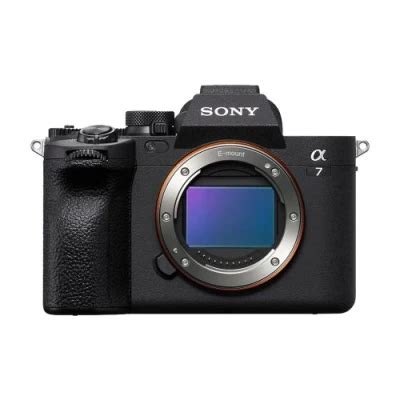
Upon picking up the camera for the first time, the most immediate sensation is one of increased volume and refined ergonomics. While it maintains the familiar silhouette of the series, the grip is deeper and more substantial. For photographers who spend eight to ten hours with a camera in hand, this change is not merely aesthetic. The deeper indentation allows for a more secure hold with heavier lenses, reducing hand fatigue and improving stability when shooting handheld. The shutter button has also been refined, providing a more tactile "click" that offers clear feedback, a small but significant improvement for those who rely on muscle memory in fast-paced environments.
The Heart of the System: New Sensor Technology
At the center of the A7 Iv is a newly developed 33-megapixel back-illuminated CMOS sensor. This represents a significant jump from the 24.2-megapixel standard that held steady for several generations. The increase in resolution is carefully calibrated; it provides enough extra detail for substantial cropping and high-quality large-format printing without reaching the massive file sizes of 50 or 60-megapixel specialized landscape cameras. This balance is critical for the intended audience, as it allows for flexibility in post-production while remaining manageable for standard computer hardware and storage solutions.
Coupled with the newest image processing engine, the sensor delivers a claimed 15 stops of dynamic range. In real-world terms, this translates to an incredible ability to recover detail from deep shadows or bright highlights, a feature that is indispensable for outdoor photographers dealing with uncontrollable natural lighting. The color science has also seen a noticeable evolution. Skin tones appear more natural and less prone to the subtle shifts that occasionally plagued earlier iterations, requiring less corrective work in the editing suite. This "look" is consistent whether shooting stills or video, ensuring a cohesive aesthetic across different types of media.
Hardware Refinements and Interface
One of the most requested features from the community has finally been implemented: a fully articulating rear LCD screen. Unlike the traditional tilting screens that were limited to vertical movements, this side-opening mechanism allows for viewing from almost any angle, including from the front of the camera. This is a transformative change for solo content creators and videographers who need to monitor their framing while standing in front of the lens. The screen itself is a high-resolution touch panel, and for the first time in this series, the touch functionality extends throughout the entire menu system.
The physical control layout has also seen a major overhaul designed to streamline the workflow between photos and movies. A dedicated "Still/Movie/S&Q" dial sits directly beneath the main mode dial, allowing users to switch between their specific setups instantly. This is a massive time-saver for hybrid shooters. Previously, changing from a high-shutter-speed photo setup to a 24fps video setup required multiple clicks and menu deep-dives. Now, the camera remembers your unique settings for each mode, letting you toggle between them with a simple flick of the thumb. Additionally, the exposure compensation dial is now unlockable and programmable, giving users the freedom to assign other functions like ISO or White Balance to that tactile physical control.
Discover deals on Electronics — updated daily.
See Deals →Real-World Use Cases
In a professional setting, the A7 Iv shines brightest when versatility is required. Consider a wedding photographer who is also tasked with capturing short cinematic clips for social media. When the light drops during a reception, the camera's improved low-light performance and advanced Real-Time Tracking autofocus ensure that the subject remains sharp even in chaotic environments. The autofocus system now includes human, animal, and bird eye detection, which functions with remarkable stickiness. During testing in a forest environment, the camera successfully tracked a bird through dense foliage, a feat that would have required manual intervention on older systems.
For landscape enthusiasts, the 33-megapixel sensor provides the "Goldilocks" resolution. It offers enough detail to capture the intricate textures of rock and water, but the pixels remain large enough to maintain excellent noise performance during long blue-hour exposures. The inclusion of a full-size HDMI port is another professional touch that landscape and studio photographers will appreciate, as it provides a much more robust connection for external monitors compared to the fragile micro-HDMI ports found on many competitors.
Pros and Cons
- Pros: High-resolution 33MP sensor provides excellent detail for stills while maintaining great low-light p…
Feature A7 III (Predecessor) A7 Iv (Current) A7R V (High-Res Sibling) Sensor Resolution 24.2 Megapixels 33.0 Megapixels 61.0 Megapixels Video Bit Depth 8-bit Internal 10-bit Internal 10-bit Internal AF Points 693 Points 759 Points 693 Points (AI Enhanced) LCD Screen Type Tilt Only Fully Articulating 4-Axis Multi-Angle Menu System Old Layout (Non-Touch) New Layout (Full Touch) New Layout (Full Touch) The comparison reveals that the IV has essentially inherited the "brain" and interface of the flagship models while opting for a sensor that serves a broader audience. Users who do not need the extreme 61-megapixel resolution of the "R" series will find the 33-megapixel sensor of the IV to be faster to work with in post-production and more forgiving in varied lighting conditions.
Buying Guide: Is It Right for You?
Deciding whether to invest in the A7 Iv depends heavily on your current gear and your primary output. If you are currently shooting with a camera that is more than four years old, the leap in autofocus technology alone justifies the upgrade. The ability of the camera to "stick" to a subject’s eye and never let go changes the way you shoot; you no longer have to worry about the technicality of focus and can instead focus entirely on composition and timing.
For Hybrid Creators: This is arguably the best value proposition on the market. If your work is a 50/50 split between photography and cinematography, the 10-bit video allows you to match footage with professional cinema cameras. The articulating screen and dedicated dials make the physical transition between these two worlds seamless. However, if you primarily shoot 4K 60p video, you must account for the 1.5x crop, which will effectively turn your 16-35mm wide-angle lens into a 24-52mm lens.
For Wildlife and Sports Photographers: The autofocus is top-tier, but the burst rate can be a bottleneck. If you need 20 or 30 frames per second to capture a specific millisecond of action, you may need to look toward higher-tier sports-focused bodies. For most amateur or semi-pro wildlife shooting, though, the 10fps speed combined with the 33-megapixel resolution (allowing for crops) is more than sufficient.
Discover deals on Electronics — updated daily.
See Deals →For Studio and Portrait Photographers: The color science improvements are the headline here. The way the camera renders skin tones reduces the hours spent in color correction. The 33MP resolution is also a sweet spot for portraits, providing plenty of detail for skin texture and hair without highlighting every single microscopic flaw as a 60MP sensor might.
Advanced Connectivity and Workflow
Beyond the hardware specs, the A7 Iv is designed to live in a connected world. The camera features a 5GHz Wi-Fi connection, which allows for much faster image transfers to a smartphone or tablet than the older 2.4GHz standard. For photojournalists and social media managers, this means the time from "shutter click" to "online post" is drastically reduced. Furthermore, the camera can act as a high-definition webcam via a simple USB connection. Unlike many other cameras that require complex software or capture cards, the IV follows UVC/UAC standards, meaning your computer recognizes it as a webcam immediately, providing 4K streaming quality for meetings or live broadcasts.
The dual card slots have also been upgraded. Both slots support UHS-II SD cards, and Slot 1 also accepts the ultra-fast CFexpress Type A cards. While SD cards are sufficient for most tasks, the CFexpress cards allow the camera’s buffer to clear almost instantly, which is vital when shooting long bursts of RAW images. This flexibility allows users to start with their existing SD card collection and upgrade to the faster format only when their workflow demands it.
Conclusion
The A7 Iv is a sophisticated evolution of a lineage that has consistently pushed the boundaries of the electronics industry. By focusing on the "quality of life" improvements—such as the better grip, the revamped menu system, and the articulating screen—it addresses the daily frustrations of working photographers. While the 33-megapixel sensor and 10-bit video provide the raw power necessary for high-end production, it is the thoughtful integration of these features that makes the camera stand out. It feels like a mature product, one that has listened to years of user feedback and synthesized those requests into a single, cohesive tool.
Whether it is being used to document a family milestone, film a professional documentary, or capture the subtle details of a landscape at dawn, the camera performs with a level of reliability that inspires confidence. It is not trying to be the fastest camera in the world, nor the one with the highest resolution; instead, it strives to be the most capable tool for the most people. In that regard, the first look at the A7 Iv reveals a device that is well-positioned to remain at the top of its class for another generation.