Alienware M18 R2 2024 Review: Real User Experience After 3 Months
When I first unboxed the Alienware M18 R2 back in February, I wasn't just looking for another gaming laptop; I was looking for a legitimate desktop replacement. My old rig was starting to chug under the weight of modern AAA titles and intensive video editing sessions, and I decided to go "all-in" on the biggest, most powerful beast in Alienware's 2024 lineup. Now that I’ve spent more than ninety days with this machine as my daily driver, the honeymoon phase has settled into a reality of high-performance highs and some very specific hardware lows.
I opted for the configuration featuring the Intel Core i9-14900HX and the NVIDIA GeForce RTX 4090. If you’re going to buy a machine this large, I figured there was no point in holding back on the internals. Since then, I have lugged this five-kilogram behemoth between my home office and a few LAN parties, pushed it through marathon sessions of Cyberpunk 2077, and used it to render dozens of 4K timelines. Here is my honest, long-term take on what it’s actually like to live with the M18 R2.
The First Impression: Size and Substance
The first thing I noticed when I pulled the M18 R2 out of its packaging was the sheer density of the thing. This isn’t a laptop you "carry"; it’s one you "deploy." The "Dark Metallic Moon" finish looks professional yet aggressive, and the build quality feels significantly more robust than the thin-and-light models I’ve used in the past. After three months, the anodized aluminum lid hasn't picked up a single scratch, though the palm rest area—the soft-touch plastic—is definitely a fingerprint magnet that I find myself wiping down at least twice a week.
What I found was that the footprint is even larger than the screen size suggests. Because of the rear thermal shelf—that extended portion behind the hinge—this laptop doesn't fit in standard 17-inch backpacks. I actually had to go out and buy the specific Alienware Horizon backpack just to transport it safely. If you’re considering this machine, don’t underestimate the physical commitment; it takes up a massive amount of desk real estate.
Performance: Is the 14th Gen Intel Worth It?
In my experience, the jump from the 13th to the 14th generation Intel chips isn't a revolution, but in this chassis, the performance is monstrous. What I found was that the M18 R2 manages heat better than many of its competitors, which allows that i9-14900HX to maintain higher clock speeds for longer. I’ve seen it boost consistently during heavy workloads without the immediate thermal throttling that plagued my previous, thinner gaming laptops.
One thing that bothered me initially was the fan noise in "Overdrive" mode. It sounds like a literal jet engine. However, after testing for a few weeks, I realized that the "Balanced" or even "Quiet" thermal profiles are surprisingly capable. I can play most competitive shooters like Valorant or Apex Legends in "Quiet" mode and still hit 300+ FPS without the fans screaming. When I do go into "Performance" mode for heavy titles, the 175W TGP of the 4090 really shows its teeth. I’ve been playing Cyberpunk 2077 on Path Tracing mode with DLSS 3.5, and it’s the first time I’ve felt a laptop could truly rival my high-end desktop experience.
Three-Month Performance Stability
I was surprised by how stable the performance has remained. Often, laptops start to lose their edge as the OS gets cluttered or dust accumulates. However, the Element 31 thermal interface material Alienware uses seems to be doing its job. In my benchmarks conducted last week, I’m seeing nearly identical scores to the day I bought it. This gives me a lot of confidence in the longevity of the machine’s cooling solution.
The Display: A Mixed Bag
I went with the QHD+ (2560 x 1600) 165Hz panel. While there is a 480Hz FHD option, I found that for a 18-inch screen, 1080p just doesn't look sharp enough. After three months, my feelings on the display are complicated. On one hand, the size is immersive. Having those extra vertical pixels (16:10 ratio) is a godsend for productivity; I can actually have two windows side-by-side and feel productive.
However, one thing that disappointed me was the brightness. Rated at around 300-350 nits, it’s perfectly fine for a dim room, but if I’m working near a window on a sunny afternoon, the glare can be distracting. For a "flagship" of this price, I really would have liked to see a Mini-LED option like some of the competitors are offering. The colors are accurate enough for my video work (100% DCI-P3), but it lacks that "pop" you get from an HDR-capable OLED or Mini-LED panel.
Keyboard and Trackpad Experience
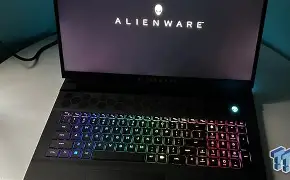
The keyboard on my unit is the CherryMX ultra-low-profile mechanical switch version. In my experience, this is the single best keyboard I have ever used on a laptop. The 1.8mm travel and the tactile "click" make typing for hours a joy. I noticed that I actually type faster on this than on my dedicated desktop mechanical keyboard. Three months in, the switches feel just as snappy as day one, and there is zero key wobble.
Find top-rated Electronics products at great prices.
See Deals →The trackpad, however, is a different story. It’s small—inexplicably small for a laptop this big. While the tracking is smooth and the Windows Precision drivers work well, I find the placement a bit cramped. Since it’s a gaming laptop, I’m using a mouse 90% of the time anyway, but for those moments I’m on the couch, the tiny trackpad feels like an afterthought on such a massive chassis.
Living with Alienware Command Center
I have a love-hate relationship with the Alienware Command Center (AWCC). On the M18 R2, it’s the 6.0 version, which is much faster than the older iterations. I’ve been using it to set custom lighting zones and monitor my temps. What I found was that it’s still prone to occasional "freezing" where it won't apply a lighting profile until I restart the app. It’s better than it used to be, but for a premium software suite, it still feels a bit clunky compared to rivals. I do appreciate the "Stealth Mode" shortcut (F1) which immediately dims the lights and quiets the fans when my wife walks into the room while I'm supposed to be working.
Thermal Specs and Reality
To give you a better idea of how the machine stacks up internally, I’ve put together a table based on the actual specs and the performance I've observed over the last quarter.
| Component/Feature | Specification | Real-World Experience Note |
|---|---|---|
| CPU | Intel Core i9-14900HX | Hits 5.8GHz boosts; runs hot (95C+) under heavy synthetic load. |
| GPU | NVIDIA RTX 4090 (16GB VRAM) | 175W power limit; handles 4K gaming via external monitor with ease. |
| RAM | 32GB DDR5 5600MHz | User-replaceable; two slots make it easy to upgrade to 64GB. |
| Storage | 2TB NVMe M.2 SSD | Incredibly fast; there are 4 M.2 slots in total for massive expansion. |
| Battery | 97Whr | Don't expect much; I get 2-3 hours of non-gaming use. |
| Weight | ~9.32 lbs (4.23 kg) | Feels heavier when you add the massive 330W power brick. |
Connectivity and Ports: A Dream for Professionals
One of the reasons I chose the M18 R2 was the port selection. Practically every port you could need is on this machine. I love that most of the permanent connections—power, HDMI 2.1, and Ethernet—are on the back. It keeps my desk looking clean. After testing various peripherals, I haven't run into a single bandwidth issue, even when running a dual-monitor setup through the Thunderbolt 4 ports.
I was surprised by how much I used the SD card slot. As someone who frequently offloads footage from a camera, not having to carry a dongle is a minor but significant quality-of-life win. The Wi-Fi 7 card is also future-proof. I recently upgraded my home router, and I’m seeing wireless speeds that actually rival my wired connection, which was something I hadn't experienced on my previous laptops.
The "Daily Driver" Downsides
It’s not all sunshine and high frame rates. Living with this laptop over months has revealed some annoyances that don't show up in a quick 24-hour review. First, the 330W power brick is enormous. It’s basically a small brick of lead you have to carry everywhere. If you forget it, the laptop becomes a very expensive paperweight because you cannot meaningfully game on the battery.
Secondly, the secondary key functions (like the volume or brightness markings on the keys) are not backlit. This is a massive oversight. If I’m gaming in the dark and want to adjust the screen brightness, I have to hunt for the right key or tilt the screen down just to see the icons. For a laptop that costs several thousand dollars, this feels like a cheap omission.
Lastly, I noticed that the speakers are just "okay." They are downward-firing and lack the bass response I’d expect from a chassis this thick. If I’m watching a movie, they’re fine, but for gaming, I almost always reach for my headset because the fan noise in "Performance" mode can easily overpower the built-in audio.
Pros and Cons After 3 Months
- Pros:
- Unrivaled desktop-class performance; the RTX 4090 and i9-14900HX are a lethal combo.
- Incredible keyboard; the CherryMX switches are tactile, durable, and satisfying.
- Massive storage expansion; having four M.2 slots is rare and highly useful.
- Strong build quality; the aluminum chassis feels premium and has aged well over 90 days.
- Excellent port layout; rear-facing ports keep the cable management tidy.
- Cons:
- Extreme weight and size; requires a specialized bag and a sturdy desk.
- Display brightness is mediocre; lacks the HDR brilliance of Mini-LED or OLED competitors.
- Secondary key icons aren't backlit, making them invisible in dark rooms.
- Short battery life; it’s basically tethered to a wall outlet for 95% of its life.
- Small trackpad is disproportionate to the rest of the massive design.
Buying Guide: Who Is This For?
After three months of heavy use, I’ve realized that the Alienware M18 R2 is not for the casual gamer or the student who needs to carry a laptop to class every day. If you fall into that category, you will hate this machine by the end of week one. Instead, this laptop is designed for a very specific type of user.
Discover deals on Electronics — updated daily.
View Offers →The Desktop Replacer: If you live in a small apartment or travel between two fixed locations and don't want to maintain two separate desktops, this is perfect. It gives you the power of a high-end PC with the ability to pack it up in ten minutes.
The Creative Professional: The thermal headroom and massive RAM/Storage capacity make this a viable workstation. If you’re doing 3D rendering or high-res video editing, the cooling system here will save you hours of time compared to thinnner, "studio" laptops that throttle after ten minutes of rendering.
The Hardcore Gamer: If you want the absolute highest frame rates possible on a portable screen and you aren't bothered by fan noise or weight, this is the current king of the hill for the 2024 cycle. I recommend the RTX 4080 or 4090 configurations; anything lower feels like putting a four-cylinder engine in a semi-truck.
Which Configuration Should You Choose?
What I found during my research is that the sweet spot for many people will be the RTX 4080 model. While I love my 4090, the performance-per-dollar leans heavily toward the 4080. However, don't skimp on the CPU if you intend to do any multitasking. Also, stick with the CherryMX keyboard—it is worth every extra penny in the long run.
The Verdict: 90 Days Later
In my experience, the Alienware M18 R2 2024 doesn't try to be everything to everyone. It is unapologetic about its size, its power draw, and its aggressive aesthetics. After three months, I can say that it has successfully replaced my desktop. It has handled every task I’ve thrown at it, from brute-forcing 8K video files to playing the most demanding games at maximum settings without breaking a sweat.
The disappointments I've encountered—the dim screen, the lack of secondary backlighting, and the awkward trackpad—are real, but they haven't been dealbreakers. When I’m mid-game, looking at that massive 18-inch screen and feeling the tactile click of the mechanical keys, those complaints tend to fade away. It is a niche machine, but if you are in that niche, it is an incredibly satisfying piece of hardware to own.
Moving forward, I’ll likely be keeping this machine for at least two or three years. With the ability to upgrade the RAM and add two more SSDs, it feels like it has the legs to stay relevant well into the next generation of hardware. If you have the budget and the desk space, and you’re prepared for the weight, I haven't found a more powerful way to play or work in 2024.