Difference Between Geekom A5 and Tp Link Archer Be9700 Explained
Category: Laptops
Introduction
Comparing the Geekom A5 and the TP‑Link Archer BE9700 requires a different mindset than comparing two laptops. One is a compact computing system; the other is a networking appliance. Buyers who search for a direct head‑to‑head are usually trying to decide how best to assemble a compact home office, gaming corner, or multimedia setup. This article explains what each product is designed to do, how they differ in purpose and performance, and how the two can complement each other in real‑world use cases.
The goal here is practical: explain what matters for everyday buyers — performance, expandability, connectivity, noise, manageability, and how each device fits into typical scenarios such as remote work, local multimedia playback, small‑office networking, and latency‑sensitive gaming.
What Each Product Is
Geekom A5 — Compact Desktop / Mini PC
The Geekom A5 is a small form‑factor desktop computer — often marketed as a mini PC. It targets buyers who want a full Windows or Linux PC in a compact chassis that fits on a desk, a media console, or behind a monitor. Mini PCs like the A5 prioritize a balance of processing power, low power consumption, and minimal footprint. They are used for everyday productivity, light content creation, HTPC duties (home theater PC), and light to moderate gaming depending on the internal CPU/APU and GPU configuration.
TP‑Link Archer BE9700 — Home/Small‑Office Router
The TP‑Link Archer BE9700 is a consumer router positioned around the latest Wi‑Fi wireless standards. Its role is to manage and distribute network connectivity across devices — handling wireless clients, wired backhaul, QoS, and sometimes mesh or multi‑link features. Routers like the Archer BE9700 emphasize wireless throughput, multi‑device capacity, improved latency characteristics, and modern features such as wider channel support and advanced modulation techniques introduced in the latest Wi‑Fi generation.
Detailed Product Analysis
Design and Physical Footprint
The Geekom A5 is intentionally compact: small enough to sit next to a laptop or below a monitor without taking much desk space. Its design typically includes multiple display outputs, a handful of USB ports, and sometimes an SD card reader. Port placement and chassis air flow are important because the smaller the case, the harder it is to dissipate heat under sustained load.
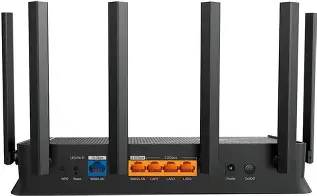
The Archer BE9700 is a stationary networking device meant to be placed centrally in the home or mounted on a wall. Its design focuses on antennas (internal or external), vents for continuous operation, and enough physical space for multiple Ethernet ports and sometimes a multi‑gig WAN/LAN port. Placement affects wireless performance significantly, so the chassis and antenna design are as important as on‑paper wireless numbers.
Performance and Capabilities
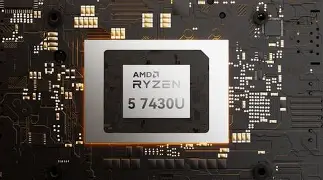
Performance for the Geekom A5 centers on the CPU/APU it ships with, memory capacity, and storage speed. For everyday tasks — web browsing, office apps, video conferencing, media playback — even energy‑efficient processors handle the load smoothly. For content creation or gaming, buyers should look at higher clocked processors and integrated/discrete GPUs. Thermal limits in a mini PC will affect performance under sustained heavy workloads.
Looking for the best Laptops & Computers deals on Amazon?
Browse Now →The Archer BE9700’s performance is measured in how many devices it can serve concurrently, its total wireless throughput, and how effectively it manages network traffic. Newer Wi‑Fi standards improve peak throughput and reduce latency for multi‑user environments. A router’s real‑world performance depends on firmware quality, channel management, and the local RF environment (walls, interference from neighboring networks, and client capabilities).
Connectivity and I/O
Geekom A5 typically offers a mix of USB‑A and USB‑C ports, HDMI and/or DisplayPort outputs for multiple monitors, and gigabit Ethernet or faster wired networking. Internal expansion may be limited but usually supports one or more M.2 NVMe slots and upgradeable RAM in many models.
The Archer BE9700 focuses on networking ports: a WAN port, several LAN ports (often including a multi‑gig option), and possibly USB for shared storage or printer sharing. The wireless radios and antenna configuration define the router’s wireless range and throughput. Advanced routers also include features like VLAN support, guest networks, and robust QoS controls aimed at optimizing specific traffic such as video conferencing or gaming.
Software, Management, and Ecosystem
Geekom mini PCs run standard operating systems: Windows or common Linux distributions. Buyers benefit from the wide…TP‑Link routers ship with firmware that exposes features through a web UI or companion mobile app. These management interfaces determine how easily non‑technical buyers can set up parental controls, QoS, or guest networks. Some routers also support third‑party firmware (on selected models), but that is less common and usually not recommended for casual buyers.
Thermals, Noise, and Power
Mini PCs like the Geekom A5 are engineered to run quietly, but under heavier loads the small fans can become audible. Buyers sensitive to noise should check independent reviews for sustained performance and noise measurements. Power consumption is moderate compared to full‑sized desktops, making mini PCs an energy‑efficient choice for continuous usage scenarios.
Routers are designed for continuous 24/7 operation; they typically run quietly since they have lower power draws and often passive cooling. Heat dissipation is still relevant: routers placed in enclosed cabinets may throttle or lose wireless range. Positioning in an open area helps performance and longevity.
Pros & Cons
Geekom A5
- Pros: Compact footprint that saves desk space; can replace a full desktop for many users; usually upgradeable RAM and NVMe storage; multiple display outputs for multi‑monitor setups; energy efficient.
- Cons: Limited internal expansion compared with desktops; thermal and sustained performance trade‑offs in a small chassis; integrated graphics may limit high‑end gaming or GPU‑accelerated workloads; potential driver/firmware variability across OSes.
TP‑Link Archer BE9700
- Pros: Modern wireless features (multi‑device handling, lower latency) that benefit streaming and gaming; likely support for advanced Wi‑Fi features such as multi‑link and wider channels; centralized management for home networks; designed for continuous operation with minimal maintenance.
- Cons: Router cannot compensate for a slow internet connection from the ISP; RF environment greatly affects real‑world speed; firmware and long‑term software support vary by vendor; placement constraints — weak performance if hidden or far from living areas.
Comparison Table
| Feature | Geekom A5 | TP‑Link Archer BE9700 |
|---|---|---|
| Device type | Mini desktop computer (compact PC) | Wireless router (networking appliance) |
| Primary function | Local computing: productivity, media, light gaming | Network distribution: Wi‑Fi access, routing, QoS |
| Target user | Home office, HTPC users, compact‑space PC buyers | Home and small‑office users needing high wireless performance |
| Connectivity | Multiple USB, display outputs, wired Ethernet | Multi‑band Wi‑Fi radios, WAN & LAN Ethernet ports |
| Upgradeability | RAM and storage typically upgradeable; CPU usually fixed | Firmware updates only; hardware fixed |
| Power & Noise | Low to moderate power; fan noise under load possible | Low power; near‑silent operation |
| Use cases | Office work, local media, light photo/video editing, small game titles | Wi‑Fi streaming, multi‑device households, gaming, video calls |
| Complexity of setup | OS installation and driver setup may be needed | Router setup via web UI/app; placement and configuration affect performance |
| Complementary? | Yes — the PC needs a good router for optimal online performance | Yes — the router benefits from a capable local device like the A5 for endpoint tasks |
Real‑World Use Cases and Buyer Considerations
Home Office and Remote Work
For someone building a compact home office, the Geekom A5 provides a tidy workstation able to run video conferencing, office suites, and browser‑heavy workflows without the bulk of a tower. However, reliable internet and low latency are equally important: the Archer BE9700 can help maintain stable video calls, prioritize conferencing traffic, and keep other home devices from interrupting work streams.
Find top-rated Laptops & Computers products at great prices.
View Offers →Media and Entertainment
As an HTPC, the A5 can deliver local 4K playback and stream services while occupying minimal shelf space. The Archer BE9700 supports multiple concurrent streams in the house; for households where several users stream 4K content simultaneously, a modern router reduces buffering and stuttering by managing wireless capacity intelligently.
Gaming
Competitive or latency‑sensitive gaming relies on both endpoint performance and network behavior. The Geekom A5’s suitability depends on its CPU/GPU configuration — higher‑end APUs or an external GPU (if supported) will improve frame rates. The Archer BE9700 should be evaluated for features like game acceleration, QoS that prioritizes gaming traffic, and MU‑MIMO or multi‑link behavior that lowers latency when many devices are online.
Small Office / Multi‑User Home
Small offices need dependable multi‑user connectivity and a device capable of handling productivity workloads. Pairing a Geekom A5 as a workstation with an Archer BE9700 as the central router is a sensible combination: the mini PC handles local tasks while the router manages network resources, segmented guest access, and wired backhaul for better stability.
Buying Guide — How to Choose Between or Combine Them
Buyers usually don’t choose one in place of the other; they choose both to satisfy different needs. The right questions to ask are about priorities, budget, and the environment.
1. Clarify the Primary Need
- If the need is computing — productivity, editing, local applications — focus first on the Geekom A5 or a comparable mini PC and its configuration.
- If the need is internet performance across multiple devices — streaming, low‑latency gaming, smart home capacity — prioritize a modern router such as the Archer BE9700.
2. Check Compatibility and Expandability
- For the mini PC: ask about RAM slots, NVMe compatibility, available display outputs, and spare ports to connect peripherals.
- For the router: check whether it supports wired multi‑gig connections, USB storage sharing, VLANs, and whether its app/web interface matches the buyer’s comfort level.
3. Evaluate Network Environment
- Routers perform best with correct placement and minimal interference; before upgrading, identify dead zones and consider whether wired backhaul or mesh nodes are needed.
- If the mini PC will be in a different room from the router, consider adding wired Ethernet or Wi‑Fi extenders/mesh to maintain speed.
4. Balance Performance vs. Thermal Constraints
- Mini PCs trade raw cooling headroom for compactness. If sustained heavy work is expected (video encoding, long gaming sessions), ensure the chosen A5 configuration has adequate cooling or consider a small desktop instead.
- Routers are built to run continuously; placing them in a closed cabinet may reduce performance over time due to heat accumulation.
5. Prioritize Software and Long‑Term Support
- Look for reliable driver and firmware update policies. A mini PC’s longevity benefits from regular OS and driver updates; routers need ongoing firmware support to maintain security and new features.
6. Measure the Total Cost of Ownership
- Factor in accessories and network upgrades: Ethernet cabling, switches, or mesh nodes may be necessary with a high‑performance router.
- For the PC, consider monitor(s), keyboard, mouse, and possible external storage when budgeting.
Practical Recommendations
- For a compact, quiet home office: choose a Geekom A5 configuration with sufficient RAM (16GB or more recommended for multitasking) and NVMe storage, paired with a router that supports modern Wi‑Fi features to ensure reliable video calls.
- For a streaming household with multiple 4K streams: invest more in the router and network topology (mesh or wired backhaul) so every device gets adequate bandwidth.
- For casual gaming on a budget: a Geekom A5 will handle many titles at moderate settings; prioritize a router with good QoS to reduce in‑game lag for a smoother experience.
- If maximum sustained compute performance is crucial (pro video editing, 3D rendering): a small desktop or a laptop with dedicated GPU may be a better choice than a mini PC constrained by passive or modest active cooling.
Conclusion
The Geekom A5 and the TP‑Link Archer BE9700 answer different problems. The Geekom A5 is about local compute: giving users a compact, capable PC for productivity, media, and light creative work. The Archer BE9700 is about connecting devices: maximizing wireless performance, managing traffic, and reducing latency in multi‑device environments.
Most buyers will benefit from both: a dependable mini PC as the endpoint and a modern router to ensure consistent, high‑quality network access. Choosing the right configuration comes down to realistic assessment of workload, the number of simultaneous users and devices, and the physical constraints of the space. By matching the computing capacity of the Geekom A5 to one’s daily tasks and pairing it with a router that meets the household’s networking demands, buyers create a compact, efficient, and well‑balanced setup.