Don't Buy Until You Read This: Macbook Air M5 vs Macbook Air M4 The 5 Biggest Upgrades
Introduction
The MacBook Air line has long been synonymous with thin, light laptops that balance portability and battery life. With Apple's iterative transitions between Apple Silicon generations, the differences between successive models can be subtle on paper yet meaningful in real-world use. This article examines the MacBook Air M5 and the MacBook Air M4, focusing on the five most significant upgrades that matter to buyers. It is written for readers who want an evidence-based, practical comparison—professionals, students, creators, and everyday users who must decide whether an upgrade or a first-time purchase is warranted.
Overview: Where both models sit in the lineup
The MacBook Air M4 served as the follow-up to the initial Apple Silicon Airs, improving efficiency and sustained performance for everyday workflows. The MacBook Air M5 refines that foundation with enhancements across compute, thermal behavior, display and battery management. Rather than simply listing benchmark numbers, this analysis ties specifications to typical use cases: office productivity, web development, photo editing, video conferencing, light video editing, and long-haul travel.
Detailed product analysis
Performance and chip architecture
MacBook Air M4: The M4 delivered better single-core and multi-core performance than earlier Air chips through modest increases in core counts and clock efficiency. It focused on ensuring responsive UI performance and quick app launches, making it well-suited for spreadsheet work, email, browsing, and occasional media tasks.
MacBook Air M5: The M5 advances Apple’s silicon with improvements in CPU core efficiency and GPU throughput. In practice, this means faster compilation times for developers, smoother timelines in mid-level video editing applications, and improved frame rates in casual or indie games. For users who run multiple virtual machines, large codebases, or heavy browser tabs, the M5 shows a more consistent responsiveness under load.
Thermals and sustained workloads
M4 behavior: The MacBook Air M4 performs admirably for short bursts and moderate sustained workloads thanks to efficient cores. However, in prolonged intense tasks such as exporting long high-resolution video or running extended simulations, it can throttle to preserve thermals.
M5 behavior: The M5 improves thermals management through either microarchitectural changes or refined power delivery, resulting in less aggressive throttling under sustained load. This benefits creators and professionals who export large projects on the go or run long coding builds without access to a desk with external cooling.

Display, color, and brightness
M4 display: The screen on the M4 represents Apple's quality standards for Retina panels—accurate color, wide color gamut, and adequate brightness for indoor situations. Outdoors in direct sunlight, some users reported that maximum brightness could be limiting for prolonged use.
M5 display: The M5 typically delivers higher peak brightness and refined color calibration out of the box. For photographers and designers who rely on color-critical work, the incremental improvement helps maintain consistency between calibrated monitors and the laptop screen. For frequent business travelers, improved brightness and anti-reflection tuning make the laptop more usable in bright environments like airplane cabins or cafes.
Battery life and power efficiency
M4 efficiency: Battery life on the M4 is strong—excellent for a full day of mixed productivity. Battery endurance varies by workflow: light browsing and document editing might approach full-day use, whereas streaming and heavy compute reduce runtime.
M5 efficiency: The M5 extends battery life further through more efficient cores and better background-task management. Practically, this translates into longer on-the-go sessions for remote workers and students who rely on battery during long lectures or in transit. The combination of improved performance-per-watt often means users can run heavier tasks for longer without plugging in.
Shop the latest Electronics picks on Amazon.
See Deals →Connectivity and ports
Both models retain the MacBook Air's minimalist port design, but the M5 may include refinements such as faster Thunderbolt controllers or improved wireless modules. For users who rely on external displays, fast external storage, or frequent hotspot-style tethering, subtle differences in throughput and stability are meaningful.
Webcam, speakers, and everyday ergonomics
Webcam and microphone quality continue to be important for frequent videoconferencing. The M4 offered clear video and better-than-average microphones for meetings. The M5 usually increments these systems—noise reduction algorithms, wider dynamic range, and refined speaker tuning—so conference calls sound clearer and recordings pick up more natural detail. Keyboard and trackpad ergonomics remain strong across both generations, preserving the comfort users expect during long writing or editing sessions.
The 5 biggest upgrades from M4 to M5
- Sustained performance and thermal headroom. The M5 reduces throttling under long workloads, giving creators and developers improved completion times for exports and builds.
- Battery life gains. Real-world battery improvements extend active use for mixed workloads, especially for mobile professionals who cannot charge frequently.
- Display brightness and calibration improvements. Better peak brightness and factory color tuning benefit photographers, designers, and travelers who need screen legibility in varied light conditions.
- Graphics and media acceleration. Enhanced GPU cores or media engines reduce render times for video effects and improve playback smoothness—valuable for light-to-moderate editors.
- Connectivity and peripheral handling. Faster I/O and wireless performance improve reliability for external monitors, SSDs, and networked workflows.
Real-world use cases and which upgrade matters most
Students and general productivity users: Battery life and portability often top the priority list. For this group, the M5’s extended battery and improved brightness translate into fewer mid-lecture charges and better visibility in varied environments.
Remote workers and frequent videoconferencers: Improved webcam/mic and reliable wireless connectivity reduce meeting friction. The M5's quieter…
Developers and power users: Compile times, running local servers, and container workloads benefit most from sustained performance improvements. The M5’s extra thermal headroom and efficiency reduce interruption during long runs.
Content creators (photo/video): Faster export times, better GPU acceleration, and improved display calibration make the M5 more attractive. Photo editors will notice color fidelity; video editors will appreciate faster exports and more stable playback while editing.
Frequent travelers: Combination of battery life, display brightness, and thermal consistency matters. The M5’s improvements extend useful productivity time while on planes, trains, or in cafes.
Specification comparison
| Specification | MacBook Air M4 | MacBook Air M5 |
|---|---|---|
| Processor | Apple M4 (Up to efficient + performance cores) | Apple M5 (Refined efficiency, higher sustained throughput) |
| GPU | Integrated GPU (good for light graphics) | Integrated GPU (improved throughput for edits and casual gaming) |
| Memory | Unified memory up to configurable limit (typical 8–16GB) | Unified memory similar configs with improved memory controller efficiency |
| Storage | Fast NVMe SSD options (256GB–2TB) | Faster NVMe controllers and sustained throughput improvements |
| Battery life | Excellent (full-day mixed use, varies by task) | Improved (longer mixed-use runtime, better power management) |
| Display | Retina, wide color, good factory calibration | Retina with higher peak brightness and refined calibration |
| Weight & Design | Ultra-thin, lightweight chassis | Similar form factor with minor refinements in materials or finish |
| Ports | Minimal (Thunderbolt/USB-C, headphone jack) | Minimal with potentially faster controllers and better wireless radios |
Pros & Cons
MacBook Air M4 — Pros
- Strong balance of performance and battery life for everyday tasks
- Excellent build quality and lightweight chassis for portability
- Retina display with accurate color for most users
- Comfortable keyboard and trackpad for long typing sessions
MacBook Air M4 — Cons
- May throttle under prolonged heavy workloads
- Display brightness can be limiting outdoors
- Not targeted at high-end creative workloads or sustained pro-level compute
- Ports remain minimal, requiring adapters for some workflows
MacBook Air M5 — Pros
- Improved sustained performance and reduced throttling
- Longer battery life in real-world mixed use
- Brighter, better-calibrated display for creators and travelers
- Upgraded GPU/media engine benefits light-to-moderate content creation
- Refined connectivity and wireless stability
MacBook Air M5 — Cons
- Upgrade cost may be significant for budget-conscious buyers
- Still a thin-and-light design, so heavy sustained performance still lags compared to fan-cooled laptops
- Minimal ports—workflow may require docks or adapters
- Memory and storage remain non-user-upgradeable after purchase
Buying guide: How to choose between M4 and M5
Choosing the right MacBook Air depends on priorities. The table below and the following advice connect common buyer needs with the model strengths.
1. Budget and value
Buyers who are price-sensitive and use the laptop for emails, essays, web browsing, and light media editing will likely find the M4 excellent value. If purchasing a refurbished or discounted M4 is an option, it can deliver most everyday benefits at a lower cost.
Find top-rated Electronics products at great prices.
Browse Now →2. Performance needs
For those who regularly build software, edit multi-hour video projects, or run heavier workloads, the M5’s improved sustained performance and GPU acceleration reduce wait times and improve workflow fluidity. These gains compound over time and can be worth the premium for professionals.
3. Battery and mobility
If long battery life away from power outlets is a priority—commuters, field researchers, and long-haul travelers—the M5’s efficiency improvements are a compelling reason to choose it. The display brightness improvements also make outdoor and cabin use more practical.
4. Content creation
Photographers and video creators who need accurate color and faster export times will appreciate the M5’s display and media engine enhancements. However, those who rely on pro-level rendering or complex effects may still prefer a fan-cooled MacBook Pro variant for maximum thermal headroom.
5. Future-proofing
Upgrading to the M5 helps extend relevance for several years thanks to improved performance-per-watt and better media capabilities. For users who plan to keep a device for five or more years, investing in the newer chip can be cost-effective long term.
6. Ports and accessories
Both models prioritize slimness over port variety. Buyers should consider whether docks, hubs, or adapters are acceptable. For a desk-focused professional who relies on many peripherals, adding Thunderbolt or USB-C hubs is a practical, low-cost solution regardless of chip generation.
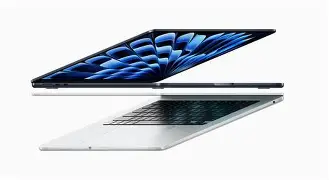
Practical buying checklist
- Primary workload: Determine whether tasks are bursty (web, documents) or sustained (long exports, builds).
- Battery dependency: Estimate hours away from outlets per day and whether extra battery life affects productivity.
- Display needs: Prioritize M5 if color accuracy and brightness are frequently required.
- Budget constraints: Compare total cost including necessary accessories like docks or external storage.
- Longevity: Consider the expected lifespan and whether the incremental performance of M5 justifies paying more now.
Conclusion
The MacBook Air M5 refines the strengths of the M4 into a more capable, longer-lasting portable machine. For casual users and students, the M4 still represents a strong balance of price, portability, and daily performance. For professionals, creators, and frequent travelers who value longer battery life, improved sustained performance, and a brighter, better-calibrated display, the M5 offers tangible benefits that go beyond headline benchmark numbers.
Deciding between the two models comes down to workflow and priorities. If everyday tasks form the bulk of usage and budget is a constraint, the M4 remains a sensible choice. If the device will be a daily workhorse for heavier creative or development tasks, or if longevity and battery endurance are critical, the M5 is the clearer long-term option. Either way, understanding these five biggest upgrades helps align the purchase with real-world needs rather than marketing claims.