Head-to-Head: Ktc H27P3 27 Monitor vs Acer Aspire Go 15 (Detailed Comparison)
Category: Laptops
Introduction
When furnishing a workspace or choosing hardware for everyday computing, buyers often weigh components that serve different but overlapping purposes: dedicated external displays and compact, all-in-one laptops. The Ktc H27P3 27 monitor and the Acer Aspire Go 15 laptop represent two such options aimed at users who value a balance of productivity, portability, and price. This comparison looks beyond marketing copy to provide practical, third‑person analysis that helps readers decide which device better fits real‑world workflows.
The Ktc H27P3 27 positions itself as a budget-friendly 27‑inch display for home offices and creative work. The Acer Aspire Go 15 is a 15‑inch ultraportable laptop intended for commuters, students, and anyone who needs capable performance in a compact chassis. Although they serve different roles, buyers frequently choose between upgrading a laptop versus investing in a larger external display. This head‑to‑head explores the strengths, tradeoffs, and typical buyer concerns for each option.
Detailed Product Analysis
Ktc H27P3 27 Monitor — What it brings to a desk
The Ktc H27P3 27 is a 27‑inch monitor designed to be a utility workhorse. In typical setups, a monitor this size is valued for increased screen real estate, easier window management, and a more comfortable visual workspace compared with laptops. Users who prioritize document editing, spreadsheets, and dual‑app workflows often prefer a larger external display to reduce context switching.
Key aspects buyers typically evaluate include panel type, resolution, color accuracy, ergonomics, and connectivity. The Ktc H27P3 aims to offer a practical balance: enough screen area for split‑screen productivity, a neutral color profile for casual photo/video editing, and common input options for connection to laptops or small form‑factor desktops. For many home office users, the monitor’s stand adjustability, VESA compatibility, and anti‑glare coating matter as much as raw pixel counts.
Real‑world use cases where a 27‑inch monitor excels include: long coding sessions with multiple panes open, spreadsheet-heavy financial work where rows and columns remain visible, and video conferencing setups where one window can be dedicated to meeting content while others hold notes and presentations. Gamers or color‑critical creators may look for higher refresh rates or professional‑grade color calibration, whereas general productivity users prioritize size, comfort, and affordability.
Acer Aspire Go 15 — Portability with practical power
The Acer Aspire Go 15 is a 15‑inch laptop category competitor that targets users who need mobility without giving up everyday performance. Buyers choosing this class of laptop often care about battery life, keyboard comfort, display quality, and whether the machine can handle light content creation and multitasking. Portability and build quality are also primary considerations for students and mobile professionals.
In real‑world terms, the Aspire Go 15 is expected to support a full day of mixed office work, web conferencing, and media playback on a single charge for many users. Its compact footprint and lighter weight make it a frequent companion for coffee‑shop work, campus life, and domestic multitasking. Key buyer concerns include thermal management under sustained load, the responsiveness of the keyboard and trackpad, and the availability of ports for external storage, displays, and accessories.
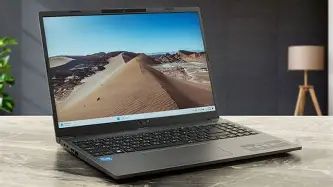
Use cases that emphasize the laptop’s strengths include traveling professionals who must edit documents and spreadsheets, remote students attending online classes, and casual creators who want to edit photos or short videos without a desktop. Where the laptop differs materially from a monitor is that it combines compute, battery, and screen into one device — a convenience that some users prefer over a multi‑component workspace.
Discover deals on Laptops & Computers — updated daily.
See Deals →Pros & Cons
Ktc H27P3 27 — Pros & Cons
- Pros:
- Large 27‑inch screen area suitable for multitasking and split screens
- Typically good value for the size — cost‑effective upgrade to desktop productivity
- Stable, ergonomic stand options and VESA mount support for flexible setups
- Simple connectivity for docking laptops or connecting small desktops
- Cons:
- No built‑in battery — not portable, requires a host device
- Color and brightness may not match professional‑grade monitors for color‑accurate work
- Refresh rate and response times may be modest for competitive gaming
- Speakers (if present) are often weak compared with dedicated laptop or external speaker setups
Acer Aspire Go 15 — Pros & Cons
- Pros:
- Integrated, portable computing: screen, keyboard, trackpad, and battery in one unit
- Good balance of performance for everyday productivity and light creative tasks
- Compact 15‑inch footprint that fits most bags and airplane trays
- Battery life and wireless connectivity designed for mobile workflows
- Cons:
- Smaller screen area compared with a 27‑inch monitor — less convenient for heavy multitasking
- Limited upgradeability in many modern thin designs (RAM/SSD often soldered or constrained)
- Thermals can throttle sustained CPU performance under prolonged heavy loads
- Port selection may be limited compared with a desktop workstation
Side‑by‑Side Comparison Table
| Feature | Ktc H27P3 27 Monitor | Acer Aspire Go 15 (Laptop) |
|---|---|---|
| Primary purpose | External large display for desktop productivity and multimedia | Portable all‑in‑one computing for mobile productivity |
| Screen size | 27 inches (desktop‑class) | 15 inches (portable laptop) |
| Ideal buyer | Home office users, coders, spreadsheet professionals, casual media creators | Students, commuters, remote workers, light content creators |
| Portability | Low — stationary device | High — designed for travel and daily carry |
| Connectivity | Display inputs (HDMI/DP), USB (model dependent), audio out | USB‑C/USB‑A, HDMI or DisplayPort via adapter (model dependent), headphone jack |
| Color & image flexibility | Typically better for larger canvas work and dual‑app workflows | Good for single‑window tasks; external monitor recommended for extended workflows |
| Battery | None | Integrated battery for hours of unplugged use |
| Upgrade path | Connect to more powerful PC for future upgrades | Limited internal upgrades; more dependent on initial configuration |
| Price considerations | Often lower entry cost to achieve larger screen area | Higher cost for portable compute + display + battery in one device |
| Best for | Multi‑window productivity, long desk sessions, comfortable viewing | On‑the‑go productivity, presentations, remote classes |
Practical Considerations and Real‑World Use Cases
Workspace versus mobility
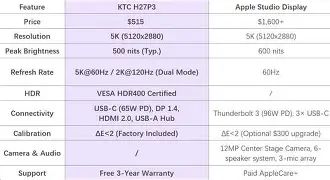
One of the most consequential real‑world decisions is whether mobility or a larger visual workspace matters more. A 27‑inch monitor like the Ktc H27P3 is a clear win for someone who spends hours at a desk — the larger display reduces scrolling and lets multiple applications be visible simultaneously. Conversely, the Acer Aspire Go 15 enables work on the train, in meetings, or between rooms at home. If a user splits time between office and travel, a combination — a portable laptop plus a home monitor — can be the most flexible solution.
Multitasking and productivity
For users who routinely have several documents, browser windows, and communication apps open, the Ktc H27P3’s larger screen is advantageous. The physical separation between laptop and monitor also helps with posture: a properly positioned external monitor allows a more ergonomic setup with a separate keyboard and mouse. The Aspire Go 15, while capable of multitasking, can feel cramped for heavy multi‑pane work without a dock or external display.
Content creation and color work
Buyers concerned with color accuracy should evaluate panel specifications and calibration options. Monitors often offer better uniformity and more precise calibration controls than laptop displays, so the Ktc H27P3 is generally a better choice for casual photo editing and video timelines when color fidelity is important. The Aspire Go 15 is suitable for quick edits and social content creation but may fall short for professional color‑critical projects without an external, calibrated display.
Gaming and media
Gaming preferences influence the decision too. A 27‑inch display provides a more immersive experience for single‑player games, especially at higher resolutions. Competitive gamers may prioritize refresh rate and response time over sheer size, which may push them toward specialized gaming monitors. The Aspire Go 15 offers convenience for gaming on the go and casual titles but typically cannot match the thermals and sustained performance of a desktop driving a large monitor.
Buying Guide: How to Choose Between the Two
Below are concrete criteria and questions to guide the purchase decision based on typical buyer priorities.
1. What is the primary use?
If the primary use is desk‑bound productivity (spreadsheets, programming, long document editing), prioritize the 27‑inch monitor. If the user needs to take work outside the home regularly, the laptop is the practical choice.
2. Do they need portability?
Choose the Acer Aspire Go 15 if portability is essential. A laptop consolidates display, input, and battery into one device and is indispensable for travel and flexible work locations.
3. Is screen real estate a productivity bottleneck?
For users who frequently juggle multiple windows, a larger external display will usually improve productivity more than upgrading internal laptop specs. The Ktc H27P3’s 27 inches make it easier to maintain context across tasks.
4. How important is color accuracy and resolution?
If accurate color reproduction matters, look for a monitor with a high‑quality IPS panel and factory calibration or a wide color gamut. Monitors typically have more predictable color performance than laptop displays at similar price points.
Find top-rated Laptops & Computers products at great prices.
View Offers →5. What is the total budget and long‑term plan?
Consider the total cost of ownership. A monitor plus a modest laptop or existing PC can be cost‑efficient. Conversely, investing in a well‑specified laptop covers mobility and may reduce the need for immediate peripheral purchases. Think about whether future upgrades (more RAM, new GPU) are expected and whether those upgrades are easier to achieve with a desktop connected to a monitor.
6. Port and accessory needs
Check the available inputs and outputs. If the user plans to attach multiple devices, external drives, or professional audio equipment, ensure the chosen device supports the necessary ports or that a dock/hub will be used. Monitors often provide limited peripheral ports compared with the range of ports on some laptops.
7. Ergonomics and workspace setup
Monitors generally offer better ergonomic flexibility — height adjustment, tilt, swivel, and VESA mounting allow users to create a more natural setup. Laptops are limited by hinge position; adding a laptop stand and external keyboard can replicate monitor ergonomics but adds expense and complexity.
Final Verdict
Both the Ktc H27P3 27 monitor and the Acer Aspire Go 15 laptop have distinct, defensible roles. The monitor is an excellent choice for someone who spends the majority of working hours at a desk and values screen space, comfort, and a practical price‑to‑size ratio. It is particularly suitable for professionals whose workflows benefit from multiple visible windows and those who want an ergonomic desktop setup.
The Acer Aspire Go 15 is a strong pick for users who need a single device that delivers consistent, on‑the‑go productivity. It serves students, frequent travelers, and people whose work happens across locations. The laptop’s integrated battery and compact design are compelling tradeoffs against the larger canvas of a 27‑inch monitor.
For many buyers, the decision is not strictly one or the other. A common, high‑value setup is a portable laptop for mobility paired with a 27‑inch monitor at a home or office. This hybrid approach leverages the strengths of both: the Aspire Go 15 for travel and meetings, and the Ktc H27P3 27 for extended desktop sessions, creative work, and superior multitasking.
Ultimately, the right choice depends on the balance between portability and workspace needs. If mobility is the priority, the Acer Aspire Go 15 will serve better; if uninterrupted desktop productivity is the goal, the Ktc H27P3 27 monitor offers a tangible improvement in comfort and efficiency.