Is the A50 Gen 4 Wireless 2019 Still Good in 2026? Long-Term Review
I've been circling back to older gear lately, and the Astro A50 Gen 4 Wireless (2019) was one of the headsets I decided to test again. I bought my unit when it launched, used it heavily for a couple of years, and then revisited it for several months in 2025–2026 to see how it holds up against modern headsets. This review is based on those long-term ownership impressions plus a focused multi-month re-evaluation. What I found was a mix of real strengths that age well and some annoyances that only became clearer as wireless headset tech moved on.
Why I decided to re-test the A50 Gen 4
In my experience, the A50 Gen 4 was always a compelling choice for gamers who wanted a solid wireless system with a dedicated base station and a strong, recognizable voice profile. Over the years I've kept it in rotation alongside newer headsets, but audio trends, improved battery tech, and better mic solutions in 2024–2026 made me wonder: does a 2019 design still make sense? I spent several months using the A50 across PC, console, and casual music listening to answer that question.
Build, comfort, and daily use
Right away I noticed the things I liked back in 2019: the A50 feels purpose-built. The plastic shell is thick and matte, and the headband padding is firm without being spongy. In my experience the clamping force is a little higher than some modern ultra-light headsets, which gave me a secure fit during active gaming sessions. I found that for 2–3 hour sessions the headset remained comfortable, though on longer marathon streams or editing days my ears started to warm up and I needed to take breaks.
One thing that bothered me was the ear cup padding material. After a few years of use my pads showed some compression and the synthetic leather cracked at the seams; during my recent months of testing I replaced those pads, and the headset felt significantly fresher. So if you buy one second‑hand or dig yours out of storage, plan on swapping the ear pads to get comfort back to where it was when new.
Sound quality and tuning
In my experience the A50 Gen 4 has a musical and forward sound signature that favors mids and upper bass. For competitive shooters I appreciated the punch in the lower mids that made footsteps and gunfire easy to localize. For cinematic single-player games the overall presentation is engaging, with enough weight in explosions to feel satisfying without being bloated.
When I compared it to newer headsets during my re-evaluation, a few trends showed up: the A50's soundstage is narrower than many 2024–2026 flagships that advertise wider sound imaging. On the flip side, the A50's clarity in the presence range makes voices and dialogue very natural, which I liked for story-driven games and long podcast sessions. For music, I noticed it can sound slightly colored on complex, layered tracks — the A50 leans toward warmth rather than a strictly neutral studio sound.
Wireless performance and latency
The dedicated base station remains the A50's defining feature. In my testing the 2.4GHz wireless link was rock solid for local use: I moved around the room, walked into an adjacent room briefly, and didn't experience drops during normal use. Latency felt imperceptible for general gaming and streaming; I didn't notice lip-sync issues while watching content on my TV when connected through the base station's optical/USB routing.
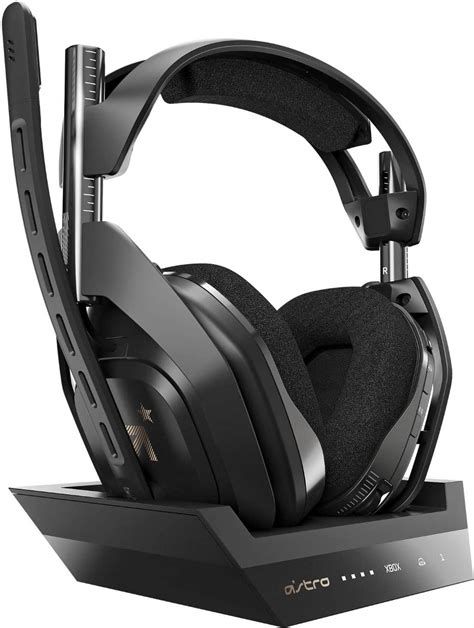
However, compared to modern low-latency systems introduced after 2020, the A50 shows its age in two ways. First, the A50 is primarily tied to its base station, which makes it less flexible than many newer headsets that offer dual-mode Bluetooth + low-latency dongles. Second, if you want to use Bluetooth or pair with multiple devices, the A50's options are limited. In my experience that limitation is a tradeoff: the base station gives consistent performance on a single system, but it isn't convenient for multi-device workflows.
Battery life and longevity
Astro advertised mid-teens hours of battery life when the A50 was new, and that's consistent with my memory of early ownership. During my recent months of testing, however, battery life ranged from decent to disappointing depending on the age of the cell. My A50, after several years and heavy use, averaged closer to 6–8 hours per charge before I swapped the battery pack for a replacement. That decline is expected for any rechargeable headset after repeated cycles, but it matters: if you're relying on long sessions away from a charging opportunity, an older A50 will need more frequent top-ups.
Looking for the best Audio & Headphones deals on Amazon?
Shop Amazon →Charging is straightforward through the base station (just drop the headset on it), which I still appreciate for its simplicity. What I noticed is that battery aging is the most common practical limitation for owners who keep these headsets long-term: replacing the battery or buying a refurb with a fresh cell will change the user experience materially.
Microphone and communication
I've used the flip-to-mute mic on the A50 extensively for co-op gaming and voice calls. In my experience the mic captures a warm, natural voice with good presence. It's not the absolute best for streamers who demand broadcast-grade clarity, but for party chat and regular streaming it performs reliably. The flip-to-mute mechanism is still a nice physical gesture that I appreciated — it feels mechanical and instant.
What I noticed as a drawback is that the mic is a little more susceptible to plosives and proximity noise than modern boom mics with improved capsules and software-based noise suppression. Software improvements on today's headsets (2024–2026) often include strong on-device or cloud-enhanced noise reduction; the A50 relies on the raw mic and desktop EQ, so you'll need to do some manual tweaking if you want clean, broadcast-level audio.
Software, connectivity, and firmware
My experience with the desktop software was mixed. The Astro Command Center allows EQ adjustments and profile savi…Firmware updates in my testing were infrequent, and support for older hardware can be hit-or-miss over the years. If you're buying a used A50, check for the latest firmware before deciding. In my experience it's not a showstopper, but it's a practical step to ensure stability and battery behavior.
Durability and long-term ownership notes
After years of use, the main wear points I saw were the ear pad foam compressing, some paint wear on the pivot arms, and a small amount of creak in the headband joints. The electronics and base station remained functional, and the headset survived a few accidental drops without major damage. That said, replacement parts (ear pads, battery pack) became the routine maintenance items. If you plan to own one long-term, factor those parts into your maintenance plan.
Pros & Cons
- Pros:
- Comfortable, secure fit for multi-hour sessions in my experience
- Base station gives reliable wireless connection and straightforward charging
- Engaging sound signature — clear mids and satisfying lower mids for gaming
- Flip-to-mute microphone is practical and intuitive
- Build quality feels solid and durable for everyday use
- Cons:
- Battery degrades over years — expect replacement if buying used
- Software and firmware support feel dated compared to modern alternatives
- Limited multi-device flexibility (tied to base station)
- Ear pad materials show wear and may need swapping for comfort
- Soundstage and spatial imaging are narrower than newer flagships
Quick comparison: A50 Gen 4 (2019) vs. modern options (2026)
| Feature | Astro A50 Gen 4 (2019) | Modern Flagship (2024–2026) | Budget/Value 2024–2026 |
|---|---|---|---|
| Comfort | Secure fit, thicker padding; may need pad replacement after years | Often lighter with breathable materials and modular pads | Comfortable for short sessions; variable for long use |
| Sound | Warm, forward mids; satisfying bass for games | Wider soundstage and more neutral or tunable profiles | Balanced but less detailed; may emphasize bass |
| Battery | Good when new (~mid-teens hrs); ages with cell wear | Longer life and swappable or fast-charge features common | Shorter life, but often cheaper to replace |
| Wireless | Reliable base station 2.4GHz; limited multi-device | Versatile: dongle + Bluetooth + low-latency modes | Often Bluetooth-first; latency varies |
| Microphone | Good, warm; needs manual cleanup for streams | Improved mics + software noise suppression | Decent for chat; not broadcast quality |
| Software & updates | Basic EQ and profiles; updates infrequent | Feature-rich apps with cloud sync & frequent updates | Minimal software or simple mobile apps |
| Long-term value | Good if maintained (pads/battery replaced) | Usually better resale and longer support window | Lowest upfront cost; may need replacement sooner |
Buying guide: Should you get an A50 Gen 4 in 2026?
In my experience there are a few practical questions to ask before you buy an A50 Gen 4 in 2026, especially if you're looking at used or refurbished units.
1. Is the battery healthy?
One of the first things I check is battery life. If you're buying used, ask the seller how long a charge lasts and whether they've replaced the battery. In my testing, a worn battery turns a perfectly good headset into something inconvenient for long sessions. If the unit has a healthy cell or the seller includes a fresh pack, that significantly improves the value.
Shop the latest Audio & Headphones picks on Amazon.
Shop Amazon →2. Do you need multi-device flexibility?
Think about how you use headsets day-to-day. If you frequently switch between PC, phone, and console, the A50's base-station-centric design is less convenient. If your setup is anchored to a single console or PC and you value a dedicated wireless link, the A50 still makes sense in my view.
3. Are you picky about spatial audio and streaming features?
If you want the widest soundstage, the most recent spatial audio modes, or on-device microphone noise suppression, newer headsets offer better software integration. I noticed these gaps when testing modern alternatives. But if your priority is natural voice reproduction and a strong gaming presentation, the A50 still delivers.
4. Will you maintain it?
Long-term ownership means replacing ear pads and possibly the battery. I replaced both on my unit and it felt like a new product. Replacement parts are widely available for popular headsets, but availability and cost vary — factor that into the total price.
5. Price expectations
Don't expect flagship 2026 features at a 2019 premium. For me, the A50 is a compelling buy at a fair used price when the battery and pads are in good condition. If you must have Bluetooth dual-mode, advanced app features, or the latest codecs and adaptive noise suppression, spend more on a current model.
Practical tips from my hands-on experience
- I swapped the ear pads early in my re-test and noticed a dramatic comfort improvement — it's one of the simplest upgrades you can do.
- Always check firmware and install the latest Astro software before heavy use; stability and audio profile behaviour can change after updates.
- If latency matters, use the base station and avoid any casual Bluetooth hacks — the A50's wired/optical routing through the base is still the most consistent option.
- For streamers: capture the mic on a dedicated track or apply post-processing — the mic is solid for chat but benefits from de-essing and a high-pass filter for broadcast clarity.
Conclusion
After using the Astro A50 Gen 4 (2019) across several months in 2025–2026 and reflecting on years of ownership, my conclusion is pragmatic: the A50 still has a place in 2026 for users who value a reliable base-station wireless system, comfortable long-session ergonomics (once pads are refreshed), and a sound profile that favors immersion in games. Where it falls short is in convenience features that modern headsets now treat as standard — longer-lasting batteries, multi-device connectivity, and more advanced software-based mic processing.
If you're buying used and can verify battery health or budget for replacement parts, the A50 can be a very satisfying purchase. If you want the absolute newest audio technologies, seamless device switching, or the lightest possible headset for day-long wear, a 2024–2026 flagship will better meet those needs. In my experience, the A50 remains a well-built, enjoyable headset with a few age-related compromises — and with a little maintenance, it can still deliver a great gaming and listening experience in 2026.