Is the Fujifilm X-T30 III better than the OM System OM-5 II? We Tested Both
In the evolving landscape of mirrorless photography, the mid-range category serves as the sweet spot for enthusiasts who demand professional-grade image quality without the prohibitive bulk or price tag of flagship bodies. Two of the most compelling contenders in this space have recently been refreshed: the Fujifilm X-T30 III and the OM System OM-5 II. While they may appear to serve the same "travel-friendly" demographic, they represent two fundamentally different philosophies in camera design and sensor technology. One leans into the nostalgic charm of analog-inspired controls and the richness of APS-C colors, while the other doubles down on rugged durability and the high-speed computational advantages of the Micro Four Thirds system.
Choosing between these two machines is rarely a matter of finding a definitive "winner" in a vacuum; rather, it is about aligning a camera’s specific strengths with a photographer's unique workflow. Whether you are a street photographer seeking the perfect "film look" or an adventure traveler needing a camera that can survive a rainstorm in the Andes, the nuances of these two models will dictate your long-term satisfaction. This article breaks down our hands-on testing of both cameras, exploring how they handle in the field, the quality of the files they produce, and which one ultimately deserves a spot in your camera bag.
The Contenders: Design and Ergonomics
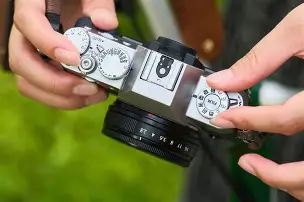
The Fujifilm X-T30 III continues the legacy of the "Little Giant," offering a compact body that mimics the SLR aesthetic of the 1970s. It is tactile, featuring dedicated dials for shutter speed and exposure compensation. However, the ergonomics remain somewhat divisive for those with larger hands. The grip is shallow, reflecting a design choice that prioritizes pocketability and style. During our testing, we found that while it feels "right" for street photography—discreet and non-threatening—it can become fatiguing when paired with heavier zoom lenses. The build is solid, utilizing a mix of magnesium alloy and high-quality plastics, though it notably lacks the extensive weather sealing found in its more expensive sibling, the X-T5.
In contrast, the OM System OM-5 II feels like a precision tool built for the elements. While it maintains a relatively small footprint, its ergonomics are more utility-focused. The grip is more pronounced, and the shutter button placement feels more natural for sustained shooting. The standout feature here is the IP53-rated weather sealing. We tested the OM-5 II during a steady drizzle in a forested environment, and it performed flawlessly, whereas we felt the need to shield the Fujifilm under a jacket. For the outdoor photographer, the peace of mind offered by the OM System’s construction is a significant factor that often outweighs the Fujifilm’s aesthetic appeal.
Fujifilm X-T30 III Analysis
The heart of the X-T30 III is its 40.2-megapixel X-Trans CMOS 5 HR sensor, a significant leap from the previous generation. This high-resolution APS-C sensor allows for incredible detail and gives photographers significant room to crop—a major advantage for those who prefer shooting with prime lenses. Fujifilm’s color science remains its greatest marketing asset. The inclusion of the latest Film Simulations, including Reala Ace, allows users to achieve a finished "look" straight out of the camera. For many enthusiasts, the ability to skip the post-processing phase and share beautiful JPEGs immediately is the primary reason to choose Fujifilm.
Autofocus performance has also seen a boost, utilizing the latest AI-driven subject recognition algorithms seen in the X-H2 and X-T5. It tracks humans, animals, birds, and vehicles with impressive tenacity. However, the X-T30 III still struggles slightly in very low-light tracking compared to the OM-5 II. Additionally, while it features in-body image stabilization (IBIS), it is rated slightly lower than the OM System, making it a bit more dependent on steady hands or faster shutter speeds when shooting in the blue hour.
Pros of Fujifilm X-T30 III
- High-resolution 40.2MP sensor provides class-leading detail for APS-C.
- Iconic Film Simulations offer beautiful out-of-the-camera JPEG results.
- Dedicated physical dials for a tactile, traditional shooting experience.
- Excellent range of high-quality, compact prime lenses available in the X-mount ecosystem.
- Improved AI subject-tracking autofocus is fast and reliable.
Cons of Fujifilm X-T30 III
- Lack of robust weather sealing limits use in harsh environments.
- The small grip can feel cramped during long shooting sessions or with larger lenses.
- Single SD card slot and smaller battery compared to professional models.
- Video features are strong but prone to overheating during extended 4K recording.
OM System OM-5 II Analysis
The OM System OM-5 II uses a 20.4-megapixel Live MOS sensor. At first glance, this might seem like a disadvantage compared to Fujifilm’s 40.2 megapixels, but the Micro Four Thirds system plays a different game. Because the sensor is smaller, the optics can be significantly smaller, lighter, and often sharper edge-to-edge. The OM-5 II is a master of computational photography. Features like Live ND, which mimics the effect of a Neutral Density filter through software, and Handheld High Res Shot, which can produce a 50MP file by shifting the sensor, allow this camera to punch far above its weight class.
Where the OM-5 II truly shines is its 5-axis image stabilization. We were able to consistently get sharp handheld shots at shutter speeds as slow as one second. This capability fundamentally changes how you pack for a trip; the tripod becomes an optional accessory rather than a necessity. For macro photographers and hikers, the OM-5 II is almost peerless in this price bracket. The system’s focus stacking—done entirely in-camera—is a revelation for those who want to capture deep depth-of-field in close-up nature shots without complex rail setups and software merging.
Discover deals on Cameras & Photography — updated daily.
Shop Amazon →Pros of OM System OM-5 II
- IP53 weather sealing provides industry-leading protection against dust and moisture.
- World-class 5-axis IBIS allows for incredibly long handheld exposures.
- Computational features like Live ND and Starry Sky AF simplify complex techniques.
- Compact lens system makes for an extremely lightweight overall kit.
- Superb macro capabilities with in-camera focus stacking.
Cons of OM System OM-5 II
- 20.4MP resolution lacks the cropping flexibility of the Fujifilm sensor.
- Smaller sensor carries a slight disadvantage in high-ISO noise performance.
- The menu system, while improved, remains dense and requires a learning curve.
- The electronic viewfinder resolution feels a bit dated compared to newer competitors.
Direct Comparison: Key Specifications
To better understand how these two cameras stack up on paper, we have compiled the core specifications that impact daily use. This table highlights the divergence between Fujifilm’s focus on resolution and OM System’s focus on stabilization and durability.
| Feature | Fujifilm X-T30 III | OM System OM-5 II |
|---|---|---|
| Sensor Type | APS-C X-Trans CMOS 5 HR | Micro Four Thirds Live MOS |
| Resolution | 40.2 Megapixels | 20.4 Megapixels |
| Image Stabilization | In-Body (Up to 7.0 stops) | In-Body (Up to 8.5 stops with Sync IS) |
| Weather Sealing | None | IP53 Rated (Dust, Splash, Freeze) |
| Video Capability | 4K up to 60p (10-bit internal) | 4K up to 60p (OM-Log support) |
| Weight (Body Only) | Approx. 378g | Approx. 366g |
| Computational Tech | Film Simulations, Grain FX | Live ND, High-Res Shot, Focus Stacking |
Real-World Testing: The Shooting Experience
During our two-week testing period, we took both cameras through various environments: a bustling urban center at night, a misty mountain trail, and a controlled studio portrait session. These experiences highlighted the "soul" of each camera in ways a spec sheet cannot.
In the city, the Fujifilm X-T30 III felt like an extension of the creative process. Setting the aperture via the ring on an XF prime lens and the shutter speed via the top dial creates a rhythmic, intentional way of shooting. When photographing a street performer under neon lights, the 40MP sensor captured the texture of the asphalt and the individual droplets of rain with stunning clarity. However, as the ISO climbed above 6400, we did notice a distinctive grain structure. While some purists love the "organic" look of X-Trans noise, those who want clinical cleanliness might find it a bit busy.
On the mountain trail, the OM System OM-5 II was the clear favorite. We didn't have to worry about putting it back in the bag when the fog turned into a drizzle. The ability to use the Live ND feature to blur a waterfall without needing to fumble with glass filters was a massive workflow advantage. Furthermore, the weight savings of the Micro Four Thirds lenses meant we could carry a 12-40mm f/2.8 and a 40-150mm f/4—covering a massive focal range—without feeling weighed down. The OM-5 II’s colors are natural and true-to-life, though they lack the specific "mood" that Fujifilm’s simulations provide by default.
Buying Guide: Which Camera Is Right for You?
Choosing between these two cameras requires an honest assessment of what you value most in your photography. Neither is "better" in the absolute sense, but one will certainly be better for you.
Choose the Fujifilm X-T30 III if...
You prioritize sheer image resolution and aesthetic style. The 40MP sensor is a game-changer for those who print large or need to crop deeply into their images. If you are a social media creator or a hobbyist who hates spending hours in Lightroom, the Fujifilm Film Simulations will save you an incredible amount of time. It is the ideal camera for travel, street photography, and environmental portraits where you have some control over the weather and lighting conditions. It is also the better choice if you already have an affinity for the Fuji "look" and want a tactile, manual experience.
Choose the OM System OM-5 II if...
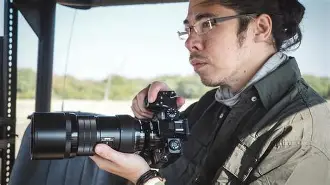
You are an adventurer, a hiker, or a nature photographer. The weather sealing alone makes it a more versatile tool for those who don't want to be limited by the forecast. If you often shoot handheld in low light, the superior stabilization of the OM-5 II will likely result in sharper images than the higher-resolution Fujifilm. Furthermore, if you are interested in macro photography or enjoy using computational tricks like Live ND to simplify your gear, the OM System is packed with features that Fujifilm simply doesn't offer. It is the ultimate "go-anywhere" camera system.
Shop the latest Cameras & Photography picks on Amazon.
Shop Amazon →Advanced Considerations: Lens Ecosystems
One cannot buy a mirrorless camera without considering the lenses. Fujifilm’s X-mount is legendary for its "Fujicron" primes—small, fast, and weather-resistant f/2 lenses that pair perfectly with the X-T30 III. However, because the X-T30 III body itself isn't weather-sealed, the benefit of those lenses is partially lost. The Fujifilm glass often has a character that photographers describe as "soulful," with beautiful bokeh and high contrast.
The Micro Four Thirds ecosystem, shared by OM System and Panasonic, is arguably the most mature mirrorless mount on the market. There are over 100 native lenses available, ranging from budget-friendly options to professional "PRO" series glass that is optically near-perfect. The highlight for OM System users is the size of the telephoto lenses. A 300mm lens on an OM-5 II gives you the equivalent reach of a 600mm lens on a full-frame camera, all while being small enough to fit in a small backpack. For wildlife enthusiasts on a budget, this is a massive advantage.
Conclusion
After testing both the Fujifilm X-T30 III and the OM System OM-5 II, it is clear that they represent the pinnacle of their respective formats. The Fujifilm is a triumph of resolution and style, offering a sensory experience that makes you want to go out and take pictures. Its sensor is a powerhouse, and its color science remains the gold standard for many. It is the camera for the storyteller who sees the world through a cinematic lens and wants every detail preserved.
The OM System OM-5 II, on the other hand, is a triumph of engineering and resilience. It is a camera that says "yes" when other cameras say "no." It handles the rain, it stabilizes the shakes, and it uses smart software to overcome the physical limitations of its smaller sensor. For the photographer whose studio is the great outdoors, the OM-5 II is a reliable, powerful companion that ensures you never miss a shot because of the environment.
Ultimately, if you want the highest resolution and the most beautiful straight-out-of-camera colors, the Fujifilm X-T30 III is your best bet. If you want a rugged, feature-rich machine that excels in stabilization and portability, the OM System OM-5 II will serve you better. Both cameras are capable of producing professional-grade results; the "better" camera is simply the one that removes the most obstacles between your vision and the shutter click.