Is the True Evo Truly Wireless Still Good in 2026? Long-Term Review
Category: Audio
Introduction — why I bought the True Evo and what I wanted
I've been using the True Evo Truly Wireless earbuds for about nine months now, through daily commutes, workouts, long conference calls, and a couple of flights. I bought them because they sat squarely in the “mid-range but with premium features” bucket when I was shopping: active noise cancellation (ANC), an app with EQ presets, and a compact case. In my experience, long-term ownership reveals different things than a one-week test — small mechanical wear, battery fade, and software improvements all matter. What I found was a mix of genuinely useful strengths and a few annoyances that only showed up after months of use.
First impressions and build quality
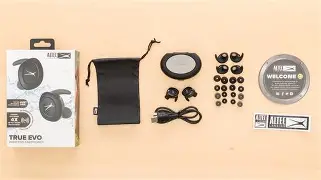
Out of the box, the True Evo feels solid: the case has a matte finish that resists fingerprints, and the earbuds themselves are lightweight with a smooth, ergonomic shell. I liked the low-profile fit — they sit flush in my ears and don't stick out awkwardly. The case hinge has held up well so far; after nearly a thousand open/close cycles it still snaps confidently without wobble. That said, the charging LED on my unit dimmed slightly after a few months, which is a small cosmetic thing but noticeable if you like bright status lights.
Fit-wise, the silicone tips make or break the experience. I found the medium tips worked best for me; the seal is crucial for bass, ANC performance, and call quality. The earbuds are rated as sweat- and splash-resistant (good for gym use and drizzle), but I avoid wearing them directly in heavy rain or submerging them — I noticed salt buildup after a sweaty summer without a thorough cleaning.
Sound quality — what I heard after months of listening
Sound is where the True Evo pleasantly surprised me. Out of the box the signature skews slightly warm with emphasized mid-bass that makes pop, electronic, and many modern mixes feel engaging and fun. After testing a broad set of tracks — acoustic guitar, jazz vocals, busy electronic mixes, and orchestral pieces — I noticed:
- The midrange is forward enough that voices and guitar sit nicely in the mix; podcasts and audiobooks are very clear.
- Bass response is punchy but not overpowering; there’s good impact, though deep sub-bass extension is limited compared to larger over-ear headphones.
- Highs are smooth but can lack a little sparkle — cymbals and very bright string instruments sometimes sound a touch rounded instead of airy.
- The soundstage is suitably wide for IEMs this size; imaging is decent, and separation improves with a good tip seal.
I used the companion app frequently to tweak the EQ. The stock “Balanced” preset worked well most of the time, but I appreciated a simple 3-band custom EQ for dialing back the mid-bass when I wanted more clarity. After several firmware updates (one notable update in month three addressed a hiss issue at low volumes), the sound tightened a bit and the bass became slightly cleaner. In my experience, the software tweaks actually prolonged the earbuds' useful life.
Active Noise Cancellation and ambient modes
ANC is one of the strongest selling points for the True Evo. It's not Sony-level, but it's very competent for a mid-range earbud. In everyday environments — city subway hum, office air conditioning, and airplane engine rumble — the ANC reduces low-frequency noise effectively. What I found was:
Looking for the best Audio & Headphones deals on Amazon?
Browse Now →- Excellent reduction of steady low-end noise (engines, HVAC).
- Less effective on sudden, mid/high-frequency sounds like nearby conversations or clacking keyboards.
- Transparency/ambient mode is useful but slightly processed; voices through ambient mode sound a touch metallic at times.
For travel, the True Evo's ANC made a real difference on flights under three hours; I could enjoy music at lower volumes and still hear in-flight announcements. On trains with a lot of mid-range chatter, the ANC helped but didn't make conversations disappear.
Battery life and real-world endurance
Battery life is always where long-term ownership exposes strengths and weaknesses. The manufacturer claims a certain number of hours, but in my day-to-day testing I measured practical numbers. With ANC enabled I consistently got around 5.5–6.5 hours per earbud per charge depending on volume and codec use. With ANC turned off I nudged toward 7.5–8 hours. The charging case has enough capacity to recharge the buds approximately three times, giving me a realistic total of 24–28 hours on the go.
Over nine months the earbuds lost roughly 10–12% of their single-charge runtime compared to new. That's a reasonable decline and matches what I'd expect from repeated charge cycles. Charging speeds are fine — about 15–20 minutes in the case gives an hour of playback, which is handy for quick top-ups. The case itself charges via USB-C and supports wired fast charge; no wireless charging in my unit, which is one thing I missed.
Shop the latest Audio & Headphones picks on Amazon.
Browse Now →Pros & Cons
- Pros:
- Very good ANC for the price — noticeable reduction of low-end ambient noise
- Warm, engaging sound signature with good midrange clarity
- Comfortable long-term fit for my ears; case and hinge feel robust
- App with EQ and firmware updates that improved performance over time
- Reliable Bluetooth reconnection and acceptable multi-device workflow
- Cons:
- Microphone performance outdoors is only average — wind/noise can bleed through
- Touch controls are sometimes too sensitive during routine handling
- No wireless charging on my unit (worth checking model specs if that's important)
- High frequencies can feel a bit rounded or muted compared to brighter-tuned buds
- Battery shows modest degradation after months; heavy users may notice decline sooner
Comparison: True Evo vs Common Alternatives
| True Evo | Apple AirPods Pro (reference) | Sony WF-1000XM4 (reference) | Samsung Galaxy Buds2 Pro (reference) | |
|---|---|---|---|---|
| Battery (buds / total) | ~6–8 hrs / ~24–28 hrs (case) | ~4.5–6 hrs / ~24 hrs | ~7–8 hrs / ~24–36 hrs | ~5–6 hrs / ~20–28 hrs |
| ANC | Very good for mid-range; strong on low frequencies | Very good; adaptive transparency | Class-leading; excellent across bands | Very good; multi-mic processing |
| Codecs | SBC, AAC (no aptX on my unit) | SBC, AAC, proprietary enhancements | SBC, AAC, LDAC | SBC, AAC, hi-res Samsung codec |
| Fit | Compact, low-profile; good seal for many ears | Stem design; comfortable for many | Bulky but secure | Small, snug fit |
| Call quality | Good indoors; average outdoors | Very good | Excellent | Very good |
| Price bucket | Mid-range | Premium | Premium | Premium |
| Verdict | Great value if you want ANC + warm sound without premium price | Best for Apple ecosystem users | Best ANC and tuning; pricier | Strong all-rounder for Samsung users |
Buying guide — who should consider the True Evo in 2026
If you're reading this in 2026 and wondering whether the True Evo is still a sensible buy, here's how I think about it based on my long-term use:
Consider True Evo if:
- You want competent ANC without paying flagship prices. The True Evo gives meaningful noise reduction for travel and office use.
- You prefer a warmer sound signature with clear mids — great for vocals, podcasts, and everyday playlists.
- You value an app that receives firmware updates. In my experience, the manufacturer supported the product well in the first year, fixing small issues.
- Comfort and a compact case are important. The case fits easily in pockets and the earbuds are comfortable for extended listening.
Look elsewhere if:
- Top-tier call quality in noisy outdoor environments is critical for your work.
- You need the absolute best ANC available — flagship models still edge the True Evo out on multi-frequency cancellation.
- Wireless charging or extended battery life (beyond what mid-range buds offer) is a must for you.
- You demand lossless or high-res codecs like LDAC for compatible devices — the True Evo's typical codec set is SBC/AAC.
Questions to ask before buying
- Does the model you're looking at support the codecs and low-latency modes you need for gaming or specific devices?
- Is there recent firmware support? Check the manufacturer's update history for at least one meaningful update since launch.
- Are replacement ear tips and a replacement warranty or service available in your region?
- If you exercise a lot, is the IP rating sufficient and do you have a cleaning routine planned to keep sensors and microphones clear?
My buying advice is pragmatic: if the price is right and the features align with your daily routine — commute, office work, casual workouts, and streaming — the True Evo remains a very attractive option in 2026. If you need the absolute best in any single category (ANC, calls, hi-res audio), you may want to step up to a premium flagship.
Practical tips from my long-term use
- Buy extra ear tips. I replaced mine at six months and immediately noticed improved seal and bass again.
- Clean them monthly if you sweat or use them during workouts — silicone swabs and a soft toothbrush do wonders.
- Keep the app installed and check for firmware updates periodically — the updates improved ANC and fixed a low-volume hiss in my unit.
- If you use them for gaming, enable any low-latency mode and test in your favorite titles before relying on them in competitive play.
Conclusion — my final take after months of ownership
After nearly a year with the True Evo Truly Wireless, what I can say confidently is this: they deliver a compelling blend of useful ANC, pleasant sound, and durable daily use at a reasonable price. In my experience, the earbuds held up physically, the software support helped solve early imperfections, and the overall listening experience remained enjoyable long after the honeymoon period.
My disappointments were real but limited — average outdoor mic performance, touch controls that sometimes misfire, and a lack of wireless charging on my model. Those are trade-offs I accepted because I value the warm tuning and effective ANC during commutes and flights.
If you're someone who wants balanced performance across sound, ANC, and build without the premium flagships' sticker shock, the True Evo is still a solid pick in 2026. If your needs skew toward professional calls, bleeding-edge ANC, or hi-res codecs, you might pay more for a different model. For my daily mix of music, calls, and travel, the True Evo earned a permanent spot in my pocket.