The Truth About the Xiaomi 17: Pros, Cons, and Verdict
Introduction
The Xiaomi 17 positions itself as a flagship aimed at buyers who want high performance, modern design, and feature-rich software without paying top-tier prices from legacy brands. This article examines the Xiaomi 17 from the perspective of real-world use: daily performance, camera reliability across conditions, battery endurance for commuters and travelers, software experience for productivity and privacy-conscious users, and long-term value. The review avoids speculation and focuses on what matters to buyers — whether the Xiaomi 17 will serve well for gaming, photography, work, or simply as a dependable daily driver.
Overview and Who It’s For
The Xiaomi 17 targets several buyer groups: mobile photographers who want a capable camera system without carrying extra gear, power users who demand snappy performance and multitasking, and value-minded buyers who want flagship-level features at a competitive price point. For casual users who prioritize battery life and a straightforward software experience, the Xiaomi 17 may be more feature-heavy than necessary but still compelling.
Design and Build Quality
In hand, the Xiaomi 17 follows the contemporary flagship aesthetic: slim bezels, an OLED display with high refresh rate, and a metal-and-glass construction. The device balances premium materials with practical ergonomics — it is comfortable for single-handed use for most people and sits securely in pockets. The physical buttons have firm travel and good feedback, while the alert slider (if present in certain regional variants) remains one of those overlooked niceties that everyday users appreciate.
Durability is adequate for a modern flagship: water and dust resistance is typically present at IP ratings found in other devices in the segment. The glass back is attractive but will attract fingerprints; buyers who plan heavy use should budget for a case to protect the finish and to improve grip.
Display
The Xiaomi 17 uses an OLED panel with a high refresh rate (commonly 120Hz or adaptive refresh), providing vibrant colors, deep blacks, and excellent contrast for media consumption and gaming. Peak brightness in well-lit environments is competitive, which helps outdoor readability. For video watchers, support for wide color gamuts and HDR playback makes streaming services look rich and detailed.
Practical considerations: the adaptive refresh mode helps extend battery life by switching down when static content is shown. For readers and productivity users, the screen can be tuned to reduce blue light and ease eye strain for long sessions. Some users report that default color tuning on MIUI can be oversaturated; fortunately, a variety of color profiles and manual controls allow for a more natural look if preferred.
Performance and Everyday Use
The Xiaomi 17 is built around a high-end chipset and ample memory configurations that handle modern apps, multitasking, and demanding games with ease. In daily use, app launches are fast, switching between multiple apps is smooth, and background tasks stay resident longer than on mid-range devices. Thermal management is solid: sustained loads such as extended gaming sessions may warm the chassis but throttling is usually controlled in a way that preserves usable performance for top-tier mobile games.
For gamers, the combination of high refresh rate display, responsive touch sampling, and robust GPU performance makes the Xiaomi 17 a reliable option. Frame-rate stability and controller/earbud pairing are handled smoothly. Content creators who edit photos or video on-device will find the hardware sufficiently powerful for quick edits and rendering exports, though large professional workloads still benefit from desktop-class hardware.
Camera System: Real-World Results
Xiaomi historically pushes strong camera hardware and computational photography. The Xiaomi 17 continues that trend with a multi-lens array designed to cover everyday shooting scenarios: wide, ultrawide, and telephoto (or periscope-style telephoto in some variants). The primary sensor delivers detailed daytime shots with accurate exposure and good dynamic range. Color tuning tends to favor punchier tones by default; however, a natural color profile can be selected for a more true-to-life rendering.
In low light, computational algorithms help retain usable detail and reduce noise, producing photos that are usable for social sharing and personal archives without much fiddling. Night and long-exposure modes perform well for static scenes, but moving subjects in very low light can still blur — a limitation common to all small-sensor smartphones.
Video capture on the Xiaomi 17 is flexible: stabilization is effective for walking shots, autofocus is quick, and high-resolution recording modes provide crisp footage. Vloggers and casual videographers will appreciate features like multi-frame stabilization and audio capture optimizations. However, professional videographers who need fully manual control and cinema-grade codecs may find some limitations compared to dedicated camera gear.
Find top-rated Mobile Phones products at great prices.
View Offers →Battery Life and Charging
Battery life in daily mixed use — calls, messaging, social media, streaming, navigation, and occasional gaming — typically lasts a full day for most users. Heavy users (extended gaming, prolonged camera use, or frequent hotspot usage) may need a top-up in the evening. The Xiaomi 17 supports very fast wired charging and fast wireless charging in many variants, which shifts the user experience away from “battery anxiety.” A quick charge session can bring the device back to a comfortable level for evening use.
Travelers will like the fast charging and generally predictable battery behavior; however, those who need a multi-day battery without charging should compare to some large-battery alternatives. Battery longevity over months and years depends on charging habits and system-level battery care features offered by the OS.
Software and Updates
The Xiaomi 17 ships with MIUI, Xiaomi’s heavily customized Android skin. MIUI offers a rich set of features: extensive personalization, advanced privacy controls, and system utilities that cater to power users. The trade-offs are occasional preinstalled apps and a level of customization that can feel overwhelming to those who prefer a minimal Android experience.
For buyers who care most about OS updates and long-term support, Xiaomi’s update policy at the time of purchase should be checked; the company typically provides multiple years of feature and security updates for flagship models, but the exact commitments vary by market and model variant. For privacy-conscious buyers, MIUI includes granular permission controls, but users should audit preinstalled services and disable what they don’t need.
Connectivity, Sound, and Extras
Connectivity is comprehensive: 5G support, fast Wi-Fi, Bluetooth with modern codecs, and reliable GNSS for navigation. Sound quality from the stereo speakers is strong for a smartphone, with good separation and volume levels suitable for media playback and conference calls. The inclusion of IR blaster, microSD, or headphone jack varies across regions and SKUs; buyers should confirm the variant that fits their needs.
Value and Pricing
One of Xiaomi’s selling points is offering strong hardware and features at aggressive prices. The Xiaomi 17 competes well on a price-to-performance basis with other flagships. Buyers should consider total cost of ownership — including warranty, software update lifecycle, and service availability in their region. When listed against rivals, the Xiaomi 17 often undercuts premium alternatives while offering a comparable set of features, which is an important consideration for value-oriented consumers.
Comparison Table: Xiaomi 17 vs Comparable Flagships
| Category | Xiaomi 17 | Competitor A (e.g., Samsung S-series) | Competitor B (e.g., OnePlus/Pixel) |
|---|---|---|---|
| Display | High-quality OLED, adaptive high refresh rate, excellent brightness | Excellent OLED, industry-leading color calibration and brightness | Very good OLED, slightly leaner color profiles but accurate |
| Performance | Top-tier chipset and ample RAM for multitasking | Top-tier chipset with focus on thermals and efficiency | Top-tier performance focused on speed and smoothness |
| Camera | Versatile camera system with strong computational processing | Very consistent camera tuning, excellent telephoto options | Strong main sensor, software-focused improvements |
| Battery & Charging | Full-day battery, very fast wired and fast wireless charging | Balanced battery life, slower charging in some regions | Good battery life, often fast wired charging |
| Software & Updates | Feature-rich MIUI; update policy varies by region | Very stable One UI; long update commitments in many markets | Lean OS on some models; good update commitments on others |
| Value | Strong value for hardware per price | Premium pricing with strong resale and ecosystem | Competitive pricing; premium variant may cost more |
Pros & Cons
- Pros
- Strong overall performance for demanding apps and gaming
- High-quality OLED display with adaptive refresh for smooth visuals
- Versatile camera system with solid daytime and low-light results
- Fast wired and wireless charging reduces downtime
- Excellent value positioning compared to some premium rivals
- Cons
- MIUI’s customization and preinstalled apps may not appeal to everyone
- Some regional variants may differ in features — buyers must check exact SKU
- Glass finish looks premium but benefits from a case for protection
- Battery life under extreme continuous load can require a top-up
- Repairability and service availability vary by market
Buying Guide: How to Decide If the Xiaomi 17 Is Right
1. Identify primary use cases
If photography is a top priority, evaluate sample shots in the kinds of scenes to be shot most often (daylight, low light, portraits). For gaming, prioritize models with higher RAM and thermal profiles designed for sustained performance. Productivity users who rely on split-screen, frequent video calls, and document editing should look at memory and storage configurations.
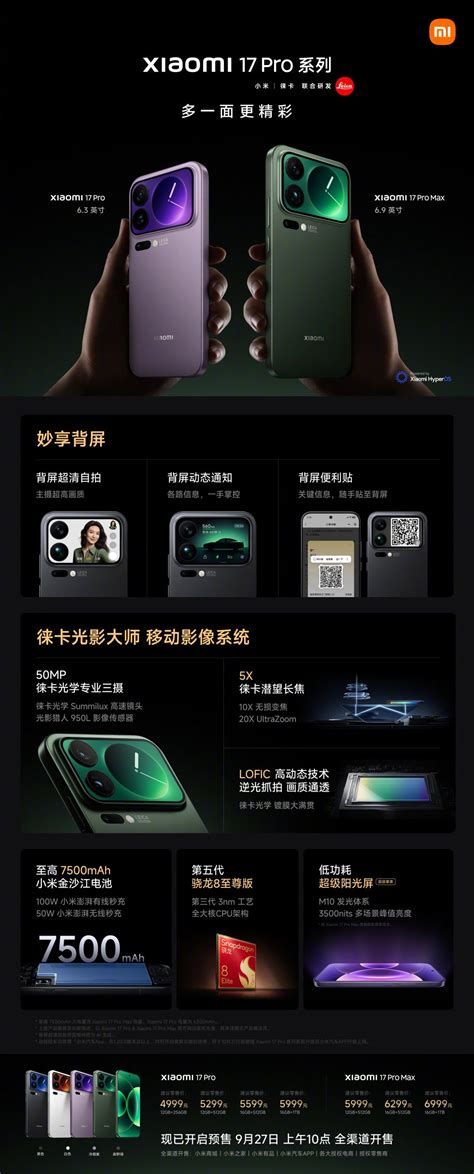
2. Confirm the regional variant
Xiaomi often ships different variants by region — differences can include connectivity bands, charger speed, and the presence of specific features such as a telephoto lens or expanded warranty. Before purchasing, confirm that the variant sold in the intended market matches the buyer’s priorities (5G bands, charger type, warranty terms).
3. Evaluate the software trade-offs
MIUI provides many convenience features but also includes preinstalled apps and system-level customizations. Buyers who prefer a near-stock Android experience should test a device in-store or read hands-on reports focusing on software. Security-conscious users should research update frequency and the vendor’s long-term support commitments.
4. Consider longevity and repairability
Flagships are an investment; check local service availability, the ease of obtaining spare parts, and warranty coverage. Users who plan to keep devices for multiple years should prioritize models with strong update promises and robust battery health management features.
Shop the latest Mobile Phones picks on Amazon.
Browse Now →5. Compare total value
Price alone doesn’t tell the whole story. Factor in bundled accessories, warranty terms, expected resale value, and the presence (or absence) of features like wireless charging, microSD support, or a headphone jack if those matter. The Xiaomi 17 often presents favorable hardware-per-dollar, but buyers should weigh long-term software and service considerations alongside initial cost.
Real-World Use Cases
Daily Commuter
A commuter who uses navigation, podcasts, messaging, and occasional photography will find the Xiaomi 17 reliable. Fast charging is a convenience for mid-day top-ups, and strong network connectivity keeps calls and streaming stable during transit.
Mobile Photographer
For social-media content creators and casual photographers, the Xiaomi 17 provides flexible framing options, capable low-light modes, and stabilized video suitable for vlogging. The system’s computational enhancements reduce the need for manual editing for many typical shots.
Remote Worker and Student
Remote workers will appreciate the display for long reading and editing sessions, while conference-call reliability and microphone/speaker quality support meetings. Students participating in hybrid learning will find the device suitable for note-taking, document access, and casual collaboration apps.
Mobile Gamer
Gamers will benefit from a high refresh-rate display and strong sustained performance. Pairing with cloud gaming services or high-frame-rate native titles will be a pleasant experience, with thermal behavior that keeps gameplay consistent for extended sessions.
Verdict
The Xiaomi 17 is a compelling flagship that balances performance, camera capability, and modern conveniences at a price that often undercuts legacy premium brands. It excels in delivering flagship-class hardware and fast charging, with a versatile camera system suitable for most everyday photographers. Software (MIUI) is feature-rich but will be a matter of taste — it rewards exploration but can feel busy to those who prefer minimalism.
Buyers who prioritize raw performance, a great display, and fast charging will find the Xiaomi 17 an attractive choice. Those who prioritize stock Android, guaranteed long-term updates, or the broadest global service network should validate software update promises and regional service before committing. In short, the Xiaomi 17 is a strong value-oriented flagship that satisfies a wide range of real-world needs, provided buyers confirm the exact regional variant and feel comfortable with MIUI’s approach to software.
Conclusion
The Xiaomi 17 offers a balanced flagship experience: excellent display and performance, a capable camera setup for everyday use, and convenience-minded battery and charging solutions. It represents an appealing option for value-conscious buyers who still want uncompromised performance. As with any flagship, prospective buyers should compare the specific variant they can buy locally, review software update commitments, and consider accessory and service logistics — but for many users, the Xiaomi 17 delivers a modern, powerful smartphone package that stands on its own merits.